1886, Highland Park, Illinois 1958, Carmel, Central
This video explores photographer Edward Weston's relationship to the natural world.
Audio Stories
Hear a brief biography of Weston
Show TranscriptHide Transcript
transcripts
NARRATOR:
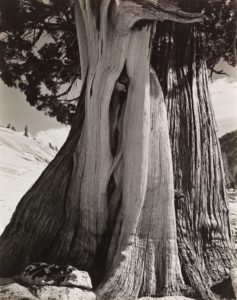
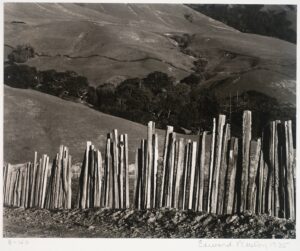
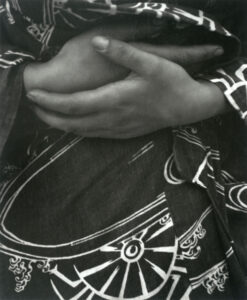
Edward Weston was that rare thing: one of the great artists of the first half of the twentieth century, working in a medium that had yet to achieve widespread recognition, and in places remote from the centers of art. As a young photographer living in southern California in the 1920s, he was versed in the modern influences coming from Europe, and traveled to New York to seek out Alfred Stieglitz’s guidance as a mentor. But it was not until he moved to Mexico, in 1924, that he found himself immersed in, and fully appreciated by, a world-class art milieu. The confidence he gained there confirmed him on his path. He returned to California—first to Glendale, and in time, to Carmel, south of the Bay Area, where many of his friends lived. Artists like Ansel Adams, Imogen Cunningham, and the other members of the f.64 group shared Weston’s vision of photography as a sharp-focus art, capable of revealing the inner life of the world through close attention to its outer surface. Weston wrote: “Clouds, torsos, shells, peppers, trees, rocks, smokestacks are but interdependent, interrelated parts of a whole, which is life. Life rhythms felt in no matter what—be it a cabbage leaf, a human body, or a strand of kelp—become symbols of the whole.”