NARRATOR:
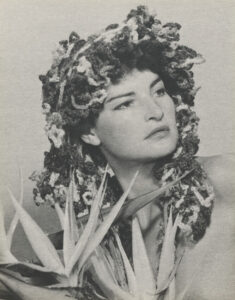
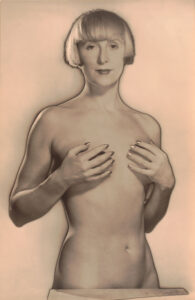
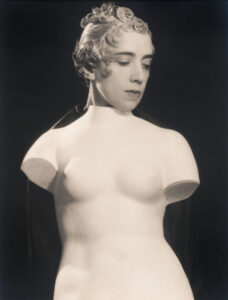
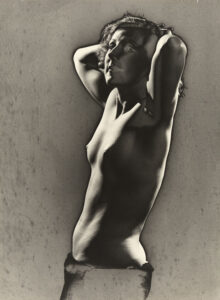
Working in Paris in the 1920s as a fashion and portrait photographer, Man Ray made photographs of some of the early twentieth century’s most creative artists and intellectuals. His experiments in the darkroom led to a body of dreamlike images that were at the heart of Surrealism. He even found a way to endow the simplest objects with a mysterious inner life. Curator Erin O’Toole.
ERIN O’TOOLE:
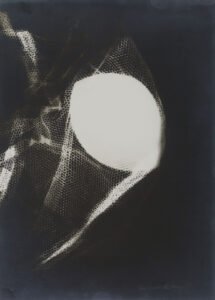
In the 1920s, Man Ray began experimenting with photograms, which are a rudimentary photographic process that’s as old as photography itself and are made by arranging objects on photographic paper and exposing them to light. Man Ray named this old process, the photogram, after himself, and called them Rayograms or Rayographs. And he saw them as a form of automatic art, as a form of art made by, he claimed, the objects themselves.
NARRATOR:
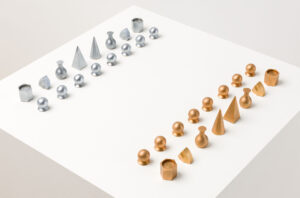
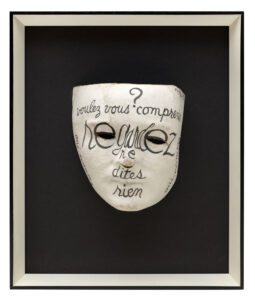
Together with his friend and co-conspirator Marcel Duchamp, avant-garde artist Man Ray broke the rules of high art through his painting, photography, sculpture, and films. Starting in New York in the early Dada movement—we’re talking 1918 through 1920—he paved the way for later generations of experimental, process-based, and conceptual artists.
O’TOOLE:
Man Ray basically made it a practice to question every convention of art. Man Ray was kind of a prankster. He had come to feel that artists often took themselves too seriously, and that art was too self-consciously important.