
Pulitzer Prize–winning composer and artist Raven Chacon uses sound, video, sculpture, and performance to address environmental justice and amplify Indigenous rights and worldviews. In The Naming of Names, his new commission featured in New Work: Raven Chacon, he invites visitors to imagine familiar places as alien landscapes through found footage of the Navajo Nation where he grew up. Learn how he created this installation and what Martian landscapes have to say about home.
What can visitors expect from The Naming of Names?
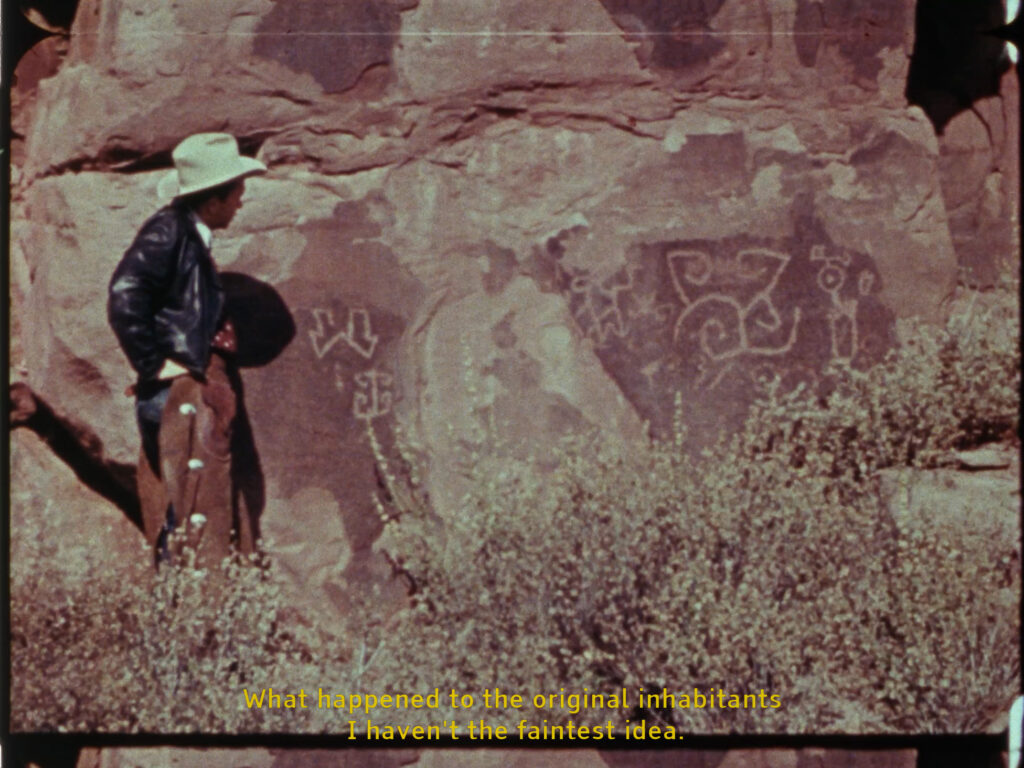
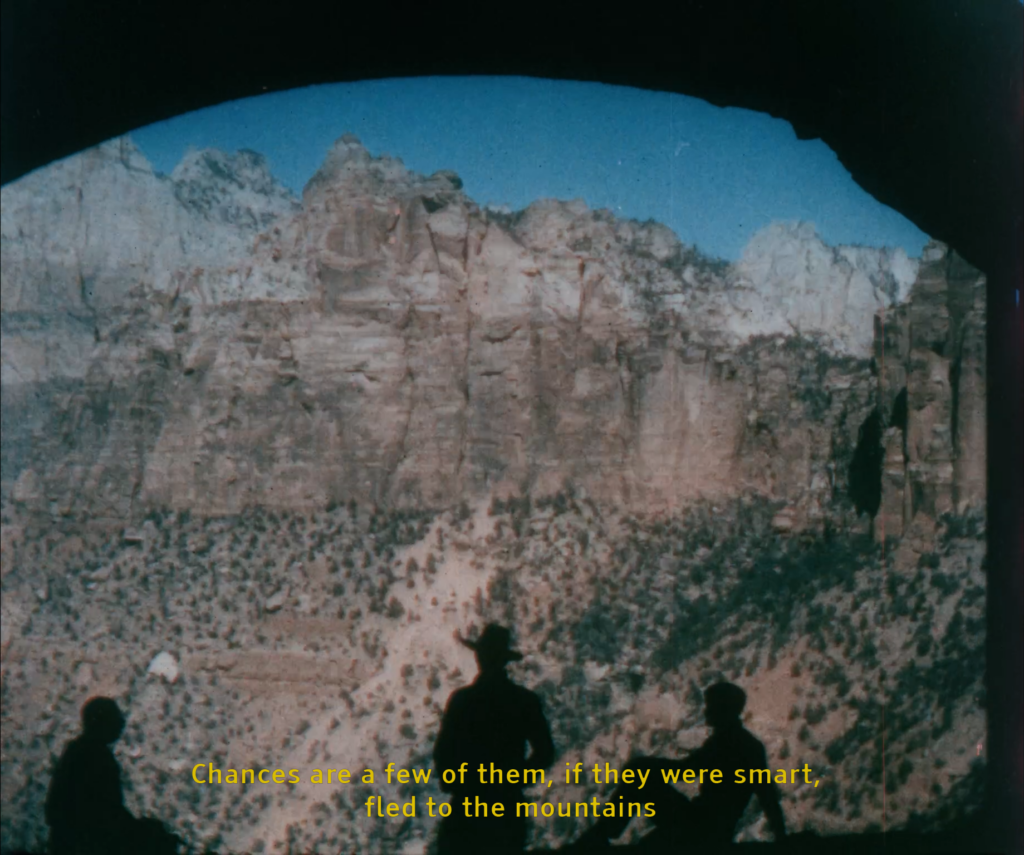
Raven Chacon: This new piece uses footage from the Prelinger Archives in San Francisco, a phenomenal resource of found footage, from eight-millimeter home movies to other kinds of archival video. The footage I’m repurposing is of the Navajo Nation, where I’m from, and a place that’s often visited by people from all over the world. I wanted to tell the story of this landscape through the eyes of tourists as if they were traveling to another planet, like Mars.
The five-channel video installation takes place across multiple viewing planes, portraying these lands as if they are uninhabited and being “discovered,” as maps of this imagined exploration become illuminated in corners of the room. The videos include subtitles taken from The Martian Chronicles (1950) by Ray Bradbury — I’m looking at science fiction narratives of colonizing space and applying these to the Desert Southwest.
How do the music or soundtracks that you create take shape?
RC: I often record landscapes, the sounds of weather in different environments, and sometimes animals and people. I’m not always seeking a snapshot of the pristine nature of a place; I recognize human encroachments are part of nature as well. There’s a lot of information in field recordings that can be used in an artwork to help tell that story.
In the case of The Naming of Names, I processed the field recordings and sounds in a way that implies this kind of otherworldly place to give a sense that one is visiting another planet.
What does it mean for you to be creating this work during the United States’ 250th anniversary and in this political moment?
RC: It’s a time marker, right? It measures a very arbitrary duration of a nation on these lands and erases the human and non-human inhabitants of places that existed before the United States, not to mention the much longer duration of deep time, which is evident in the landscape itself, the rocks being our eldest reminder.
I use science fiction to have that discussion about how humans occupy a very small window of time on earth. Celebrating 250 years seems very small among the larger histories that I’m trying to share with these moving images, which give their own sense of elapsed time.
How do concepts of time show up in your work?
RC: Music is one way because it allows you to play with the parameters of sound, for instance, through repetition or layering. Experimental and improvisational music, in particular, can be a moment where we escape the confines of linear time that we operate in throughout our daily lives.
If music unlocks time for you, then how does it unlock community, collaboration, and improvisation in work you create?
RC: One thing about music that interests me aside from the possible perceptions of time are the social and collaborative aspects of making music. There are shared aspects of time, but also individual responses that come together when a group collaborates to make music. Those personal mediations on time — rhythm, playing in time, playing on the beat, or lining up — is what makes music interesting to me.
When I perform as a soloist, I am often working against whatever clock individuals in the audience are aligned to, and they are all different. But I love to play music with other people and have this exchange on stage, in a recording studio, or wherever we are.
“When I make work about the land, ultimately my interest is that we all see the importance of stewarding these places together, and that everyone shares a responsibility to ensure these lands and the people who live there can survive.”
You wear many creative hats, but do you consider yourself primarily a musician, artist, documentarian, educator, or all of the above?
RC: I refer to myself as a composer and in more recent years an artist. I’m not sure I consider myself a musician, although sometimes I am a musician in the service of other people’s compositions. I like to be somebody who’s asked to make sounds that somebody else puts together, conducts, or composes. In a way these pieces reflect my own work in the way their composers think through a durational experience, even if that durational experience loops, like a lot of my installations do.
What themes do you hope people consider more deeply?
RC: When I make work about the land, ultimately my interest is that we all see the importance of stewarding these places together, and that everyone shares a responsibility to ensure these lands and the people who live there can survive. I hope that these artworks can be a reminder that we should take care of the environment and also try to prevent or even undo the greed that is changing these landscapes.
New Work: Raven Chacon is on view from October 24, 2026, through November 7, 2027, on Floor 6.