The museum will be closed September 14–16, 2026 for a private event. The Museum Store will remain open to the public from 3rd Street.

This October, SFMOMA presents RM x SFMOMA: Between You and Me, the first museum exhibition featuring paintings, drawings, sculptures, ceramics, textiles, and design works from the personal collection of RM, leader of pop royalty BTS.
Organized by SFMOMA with RM, the exhibition provides art lovers unprecedented access to the performer’s unparalleled collection of Korean art while offering his fans a rare window into another aspect of his creative world.
RM x SFMOMA is one of the largest presentations of Korean modern and contemporary art convened in the US, though works on view date from the 13th century to the present day. The exhibition features nearly 200 works — three-quarters from RM’s collection and one-quarter from SFMOMA — with many shown in thoughtful pairings that highlight shared connections, from art historical context to technique to the feelings they elicit. Explore the rich history of Korean art in a presentation that resonates across generations and cultures. RM x SFMOMA is on view October 3, 2026, through February 7, 2027, on Floor 7.
A NEW APPROACH TO EXHIBITION BUILDING
The idea for this exhibition emerged two years ago when SFMOMA Project Manager and co-curator América Castillo proposed a deeply personal showcase that translates RM’s individual perspective on art into a shared encounter that offers a fresh way to present works in the museum. Castillo, with Assistant Curator of Painting and Sculpture and co-curator Hyoeun Kim, shaped a vision that charts RM’s journey as a deeply engaged art collector. What began with museum visits while on tour with BTS has grown into a diverse collection spanning disciplines, movements, and artists from around the world, while also comprising one of the most impressive individual holdings of modern and contemporary Korean art.
RM x SFMOMA is RM’s first-ever partnership with a museum as an exhibition co-curator. “As someone from a nontraditional curatorial path, I’ve long been interested in museums expanding beyond their comfort zones, not just in reaching new audiences, but in who is curating as well,” says Castillo. “I’m excited about who this might bring into SFMOMA, including those who may not have felt spoken to by traditional art history frameworks.”
RM’s collection is built on personal resonance, not market trends or academic argument. The exhibition reflects that sensibility. His point of view is woven into every aspect of the exhibition, from the questions that shaped the presentation to the selection of works displayed to the art direction in the galleries. He even wrote the wall text and art labels that appear throughout the exhibition, adding further insight into his connection to these works.
“I’m excited about who this might bring into SFMOMA, including those who may not have felt spoken to by traditional art history frameworks.”
Everyday subjects, quiet scenes, and invitations for contemplation are consistent throughlines in RM’s holdings. “A collection is not simply an accumulation of works, but a way of seeing that takes shape over time. When works are brought together with a consistent sensibility, they form relationships with one another and meaning emerges through those connections,” Hyoeun Kim says. In RM x SFMOMA, these relationships are presented through thematic groupings that reflect on everyday beauty, nature, sensitivity to the artist’s life, and questions of human existence.
Some sections are more playful, like Friendscape, which embraces wordplay in its mash-up of human and animal friends with landscape. The whimsical theme, I Don’t Know But I Like It, features artworks that defy easy categorization, yet stay true to the muted palette, serenity, and emotional restraint that RM gravitates towards. His collection demonstrates how one person’s way of seeing can reflect universal questions or emotions experienced by many. “Visitors may enter through RM’s point of view, but they leave confronting their own,” says Hyoeun Kim.
KEY FIGURES IN THE RM COLLECTION
Through the presentation, visitors gain an introduction to the rich history of modern and contemporary Korean art. Kim Whanki (1913–1974) and Yun Hyong-keun (1928–2007) are foundational figures in this story, and their works frame the journey of RM x SFMOMA.
A pioneering figure in Korean abstract painting, Kim was born in Korea, but spent significant time among creative communities in Tokyo, Paris, and New York, which deeply informed his practice. He developed a visual language that bridged tradition and modernity, blending Korean ideals such as harmony, simplicity, and tranquility with the patterns and colors of abstraction.
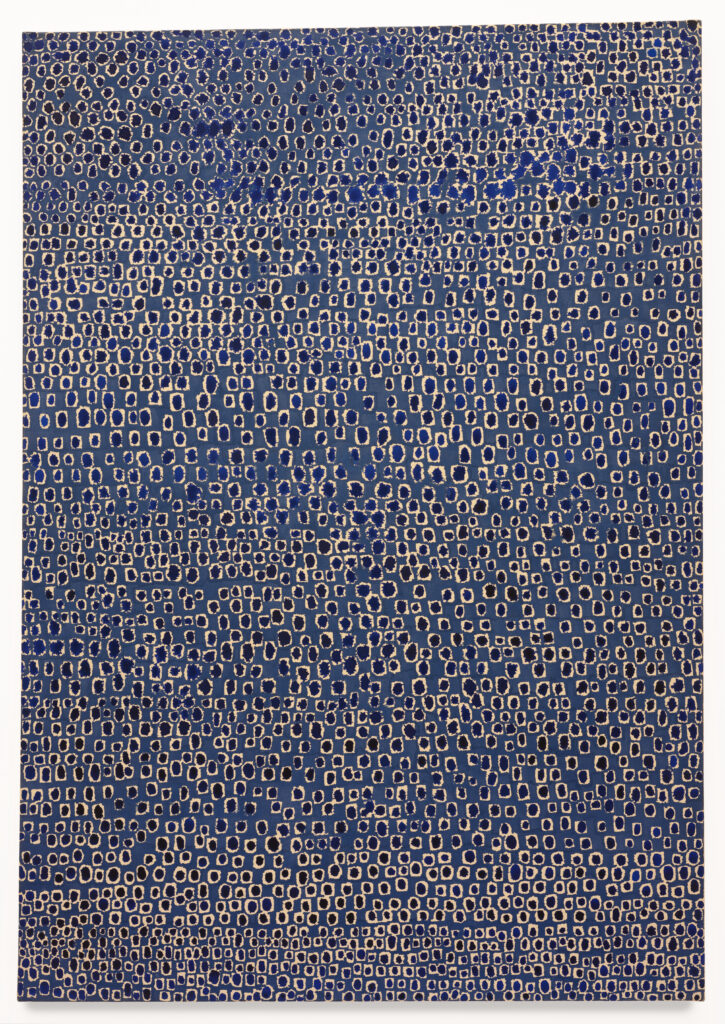
The exhibition features three works by Kim, including 26-I-70 (1970), a work from his “all-over dot” painting period that is named for the date of its completion. Kim created this work while living in New York but feeling nostalgia for his home country. “I can’t seem to separate my art from Seoul,” he said, and that melancholy tinges this work.
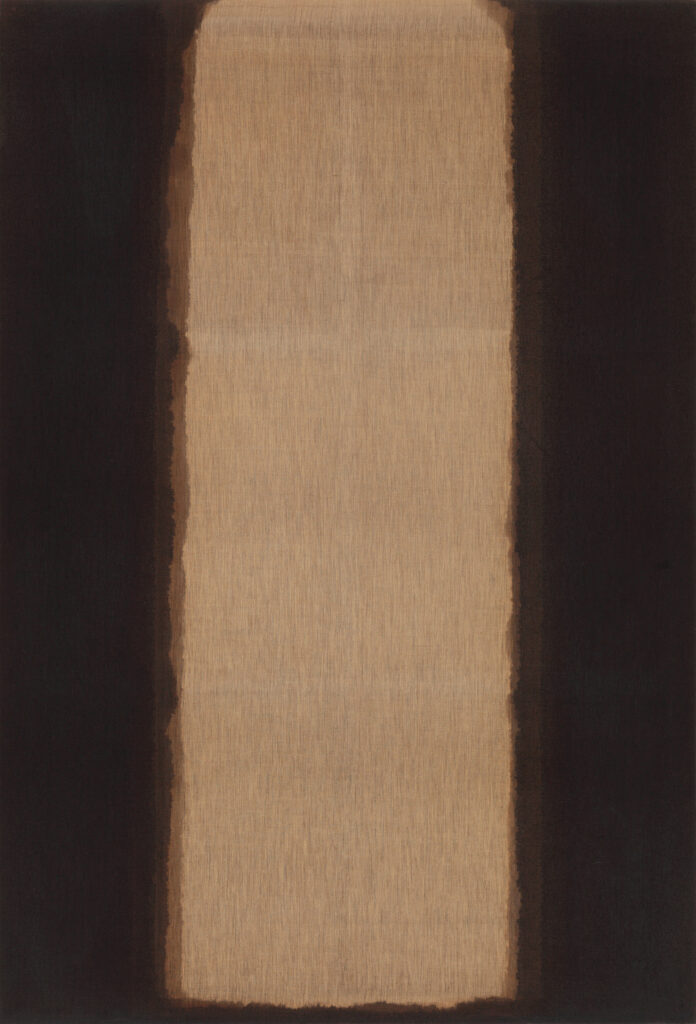
Yun Hyong-keun, who was both a student and later the son-in-law of Kim, is one of RM’s favorite Korean artists and a prominent part of the exhibition, with his own dedicated gallery featuring sixteen works. Yun was a young adult during the Korean War, a period of political repression during which he faced multiple arrests and persecution. His works, known for their philosophical depth, materiality, and restrained palette, carry the weight of these experiences in their technique and solemnity. Large paintings layering ultramarine and umber, such as Blue-Umber ‘79-C6, which appears in the exhibition’s last section, represent Yun’s concept of the gate of heaven and earth, where blue symbolizes the color of heaven and umber the color of earth.
He was also a leading figure of Korea’s 1970s Dansaekhwa art movement characterized by monochromatic paintings. The exhibition features works by other artists from this period, including Chung Sang Hwa and Kim Tschang-yeul.
“To encounter the work of Kim Whanki and Yun Hyong-keun together is to begin to see how Korean modern art has given form to perception, reflection, and the experience of its time,” says Hyoeun Kim. Learn more about Yun’s and Kim Whanki’s art practices in the Exhibition Highlights section.
“To encounter the work of Kim Whanki and Yun Hyong-keun together is to begin to see how Korean modern art has given form to perception, reflection, and the experience of its time.”
Works by other key figures of modern and contemporary Korean art, such as Chang Ucchin (1917–1990), Kwon Okyon (1923–2011), and To Sangbong (1902–1977), are incorporated thematically as the exhibition moves from Kim’s expansive, outward-looking modernism to Yun’s inward, contemplative gravity. Chang’s oil paintings in the Home section exude a warmth and playful character in their colorful depictions of animals, children, and Korean daily life. “There’s innocence, tenderness, and a quiet humanity in his scenes,” says Castillo. “His works represent some of the qualities that make this exhibition special — sincerity without spectacle, and a belief that the everyday is worthy of serious attention.”
EXHIBITION HIGHLIGHTS
Through the pairing of works by Korean artists alongside those by artists from other countries, the exhibition interweaves RM’s and SFMOMA’s collections so each deepens and expands the meaning of the other.
Some pairings situate Korean artists within broader global conversations, such as questions they were grappling with or shared artistic, material, or historical influences. The following are some of the highlights not to be missed.
Kim Whanki + Yves Klein
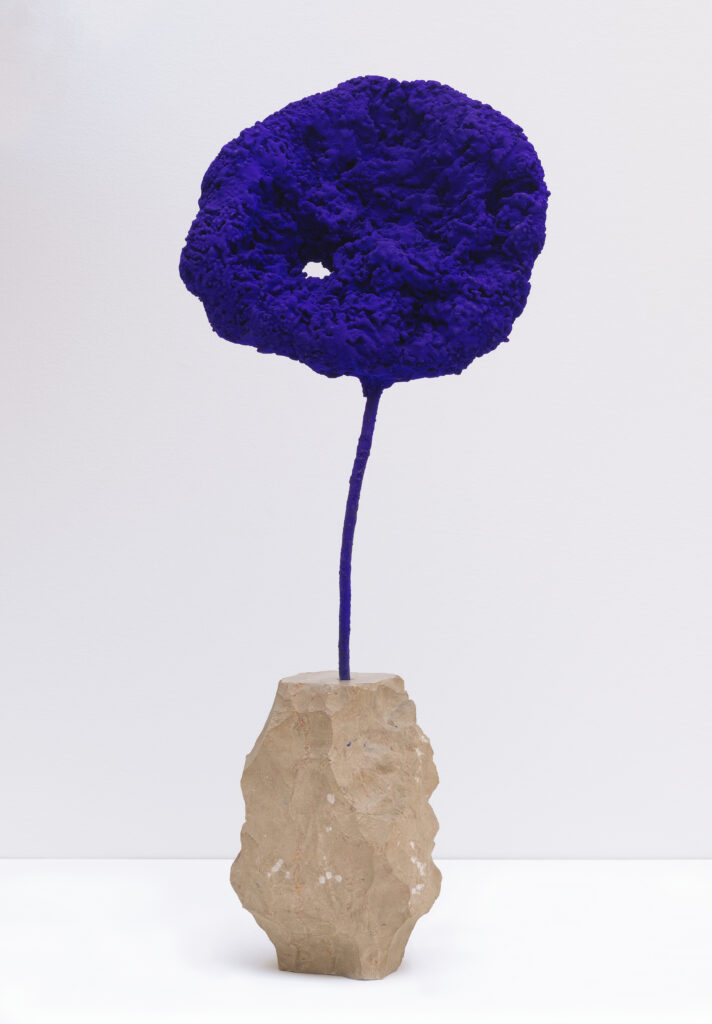
Kim Whanki’s 26-I-70 and 15-VII-70 #181 (1970) appear with Yves Klein’s Éponge (SE251) (Sponge [SE 251]) (1961) in the Bluewater section. Despite different cultural contexts, the artists shared similar artistic approaches as seen in their minimalist, monochromatic works. Both used blue as a metaphysical field or philosophical space to represent the cosmic and infinite. Kim took it further with repetitive dots and grids that conjure constellatory patterns and feelings of melancholy and belonging, while Klein continually reduced the elements in his works to the point where paint became the subject, including his own special mix called International Klein Blue.
To Sangbong + Giorgio Morandi
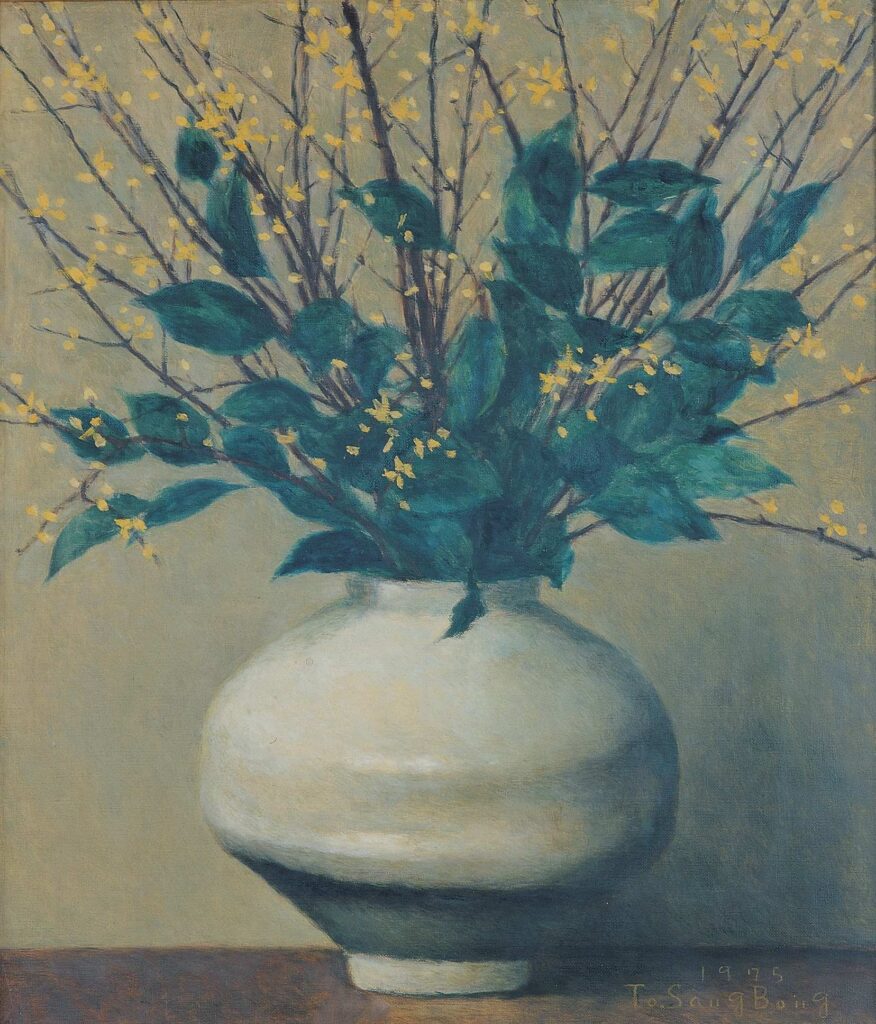
To Sangbong (1902–1977) and Giorgio Morandi (1890–1964) were masters of still life who captured the extraordinary in the ordinary in meditative depictions of humble domestic items like jars, vases, and bottles. In the Home section, the quiet muted colors of flower bouquets in To’s Forsythia (1975) and Morandi’s Fiori (1949) belie very deliberate choices around volume, form, spatial relationships, and tonal harmony.
Yoo Youngkuk + Milton Avery
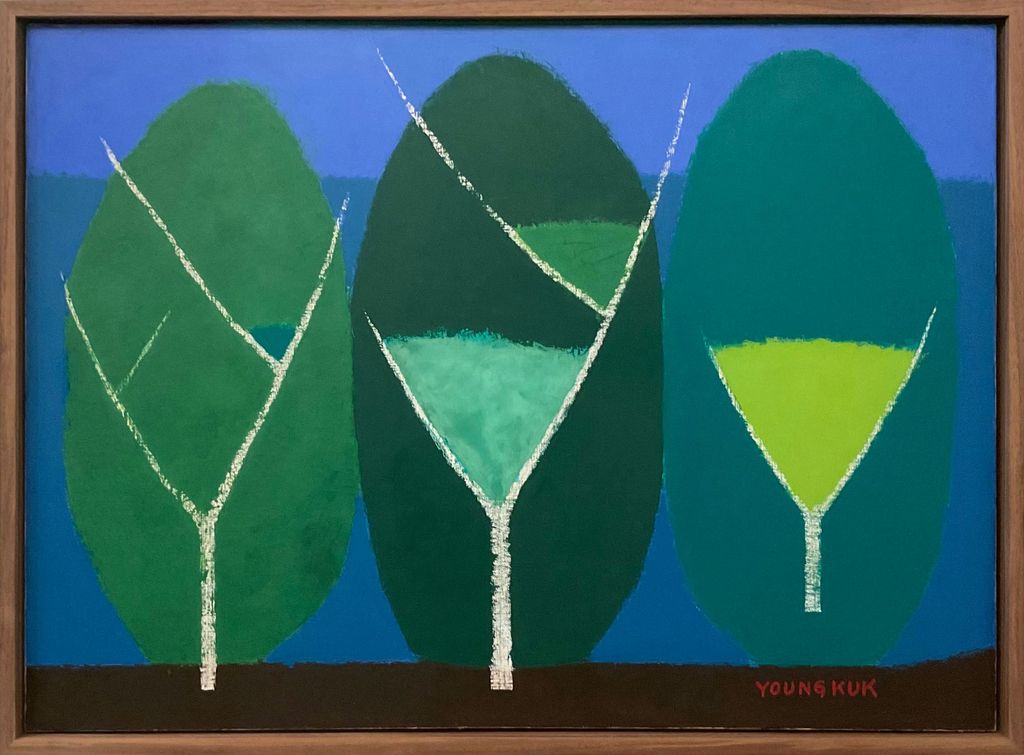
Yoo Youngkuk’s Work (Trees) (1981) and Milton Avery’s Clear Cut Landscape (1951) in the Friendscape section highlight the artists’ parallel explorations of landscape through abstraction. In these works, created thirty years apart, trees serve as the vehicle through which Yoo (1916–2002) and Avery (1885–1965) explore color, form, and meaning.
Yoo, a pioneer of Korean abstract art whose practice spanned more than seven decades, focused on geometric shapes and bold applications of paint in vibrant colors to represent nature. Avery simplified figures and landscapes to their essential shapes, continually flattening space and removing details to leave “nothing but color and pattern.”
Kim Tschang-yeul + Tony Feher
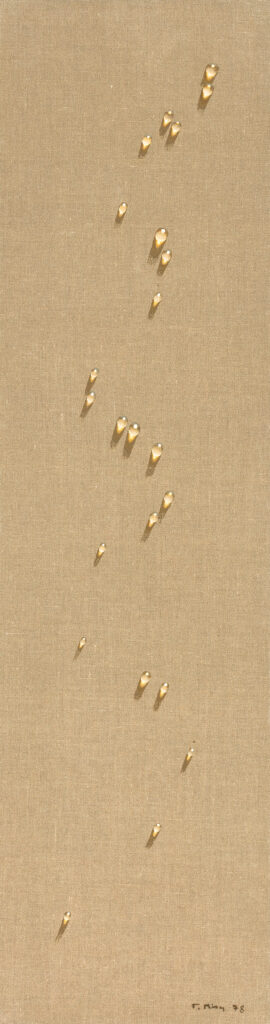
Kim Tschang-yeul’s painting Waterdrops (1978) and Tony Feher’s installation It Seemed a Beautiful Day (2002) use water to engage with themes of memory, loss, and healing — the Korean War for Kim and the September 11th World Trade Center terrorist attack for Feher. For Kim (1929–2021), the ephemeral quality of the water droplets evokes a sense of impermanence and erasure, while their repeated appearance across the surface conveys a sense of accumulation and endurance. These qualities can also be read in relation to the artist’s life, shaped by the wounds of war and division. Feher (1956–2016) used partially filled plastic water bottles strung high in the gallery with mangled wire to recall both the horrible destruction of the skyscrapers and the beauty of the clear blue sky in New York City that day in 2001.
Yun Hyong-keun + Donald Judd
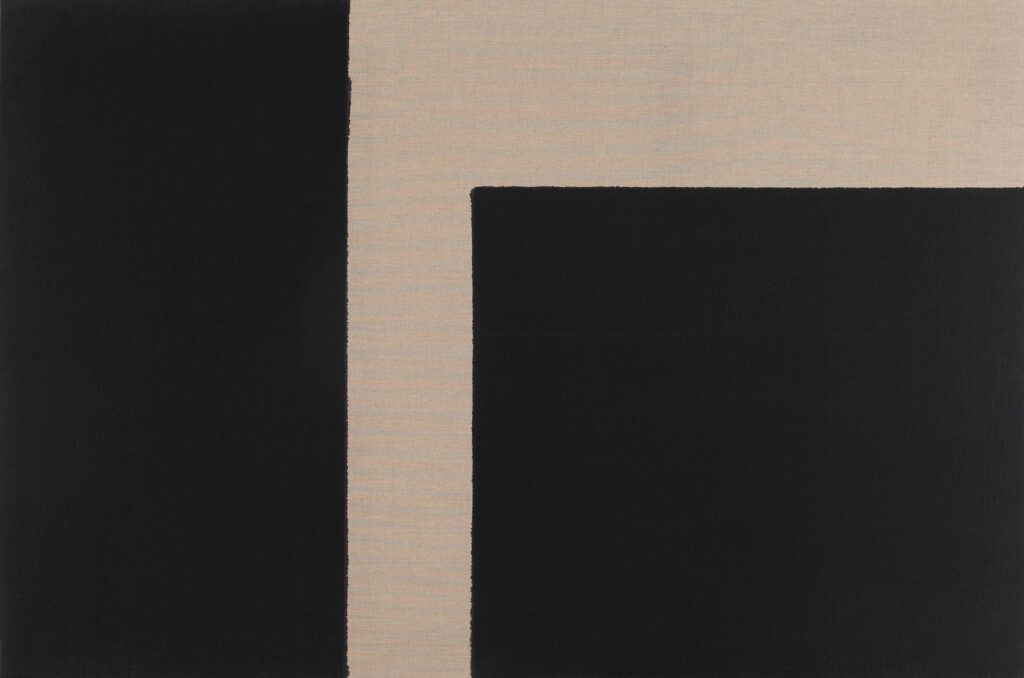
Where real relationships existed between artists, the curators made those encounters visible. One powerful story is the friendship between Yun Hyong-keun and Donald Judd (1928–1994). Yun and Judd met in 1991, and Judd became an advocate for Yun’s work internationally, illustrating how artistic dialogues transcend geography and how human connections can bring artists together. In the exhibition, Yun’s Burnt Umber & Ultramarine (2001) appears alongside Judd’s To Susan Buckwalter (1964), works that show different ways of creating a sense of space using simple forms.
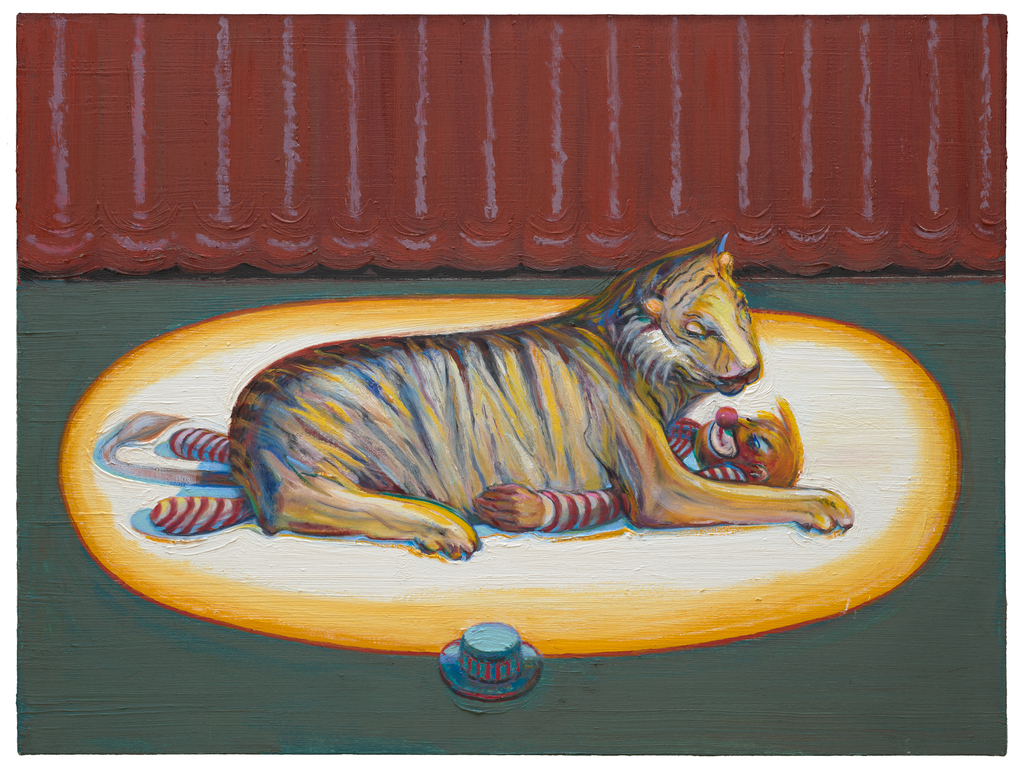
Other juxtapositions connect through intimacy or playfulness. Spring Sleep (2017) by Kang Yobae (b. 1952) and Clown and Beast (2018–19) by Wayne Thiebaud (1920–2021) both depict felines. Appearing side by side in the Friendscape section, Kang’s tranquil scene of a sleeping cat captures the intimacy and vulnerability found in rest, while Thiebaud depicts vulnerability of a very different sort in his painting of a circus clown (a representation of himself) pinned down by a tiger whose intent is unclear.
We invite you to wander the galleries of RM x SFMOMA, following your own path and creating your own connections to these works as they call to you, challenge you, and move you, much as they did RM. “This show creates a different entry point, and that’s meaningful,” Castillo says. “Each person can find their own way into these stories. This space is meant to feel like it is yours, something between you and the work.”
RM x SFMOMA: Between You and Me is on view October 3, 2026, through February 7, 2027, on Floor 7.