
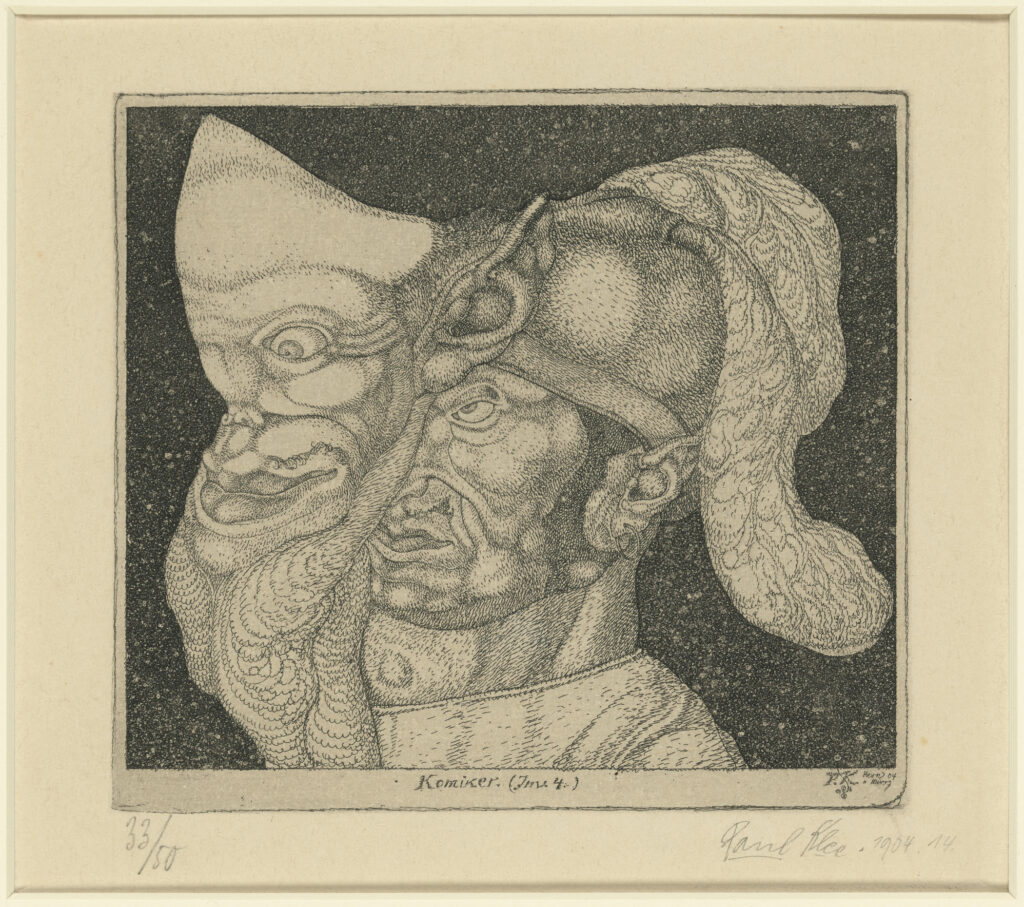
Paul Klee stood at the forefront of a growing fascination with the mask at the turn of the twentieth century. As artists in Klee’s circles sought alternatives to realistic representations and stable notions of identity, the mask emerged as a versatile form linking ancient ritual, modern psychology, and popular entertainment. Theater, caricature, and folk traditions blurred distinctions between high and low culture and provided fertile ground for diverse forms of the mask to evolve. After World War I, these attitudes took on new urgency. Many of Klee’s friends were killed, exiled, or deeply changed, and he embraced abstraction as a cathartic process. His simplified, interlocking figures function like masks, as symbolic systems rather than portraits. Klee remarked, “My self, for instance, is a dramatic ensemble.”
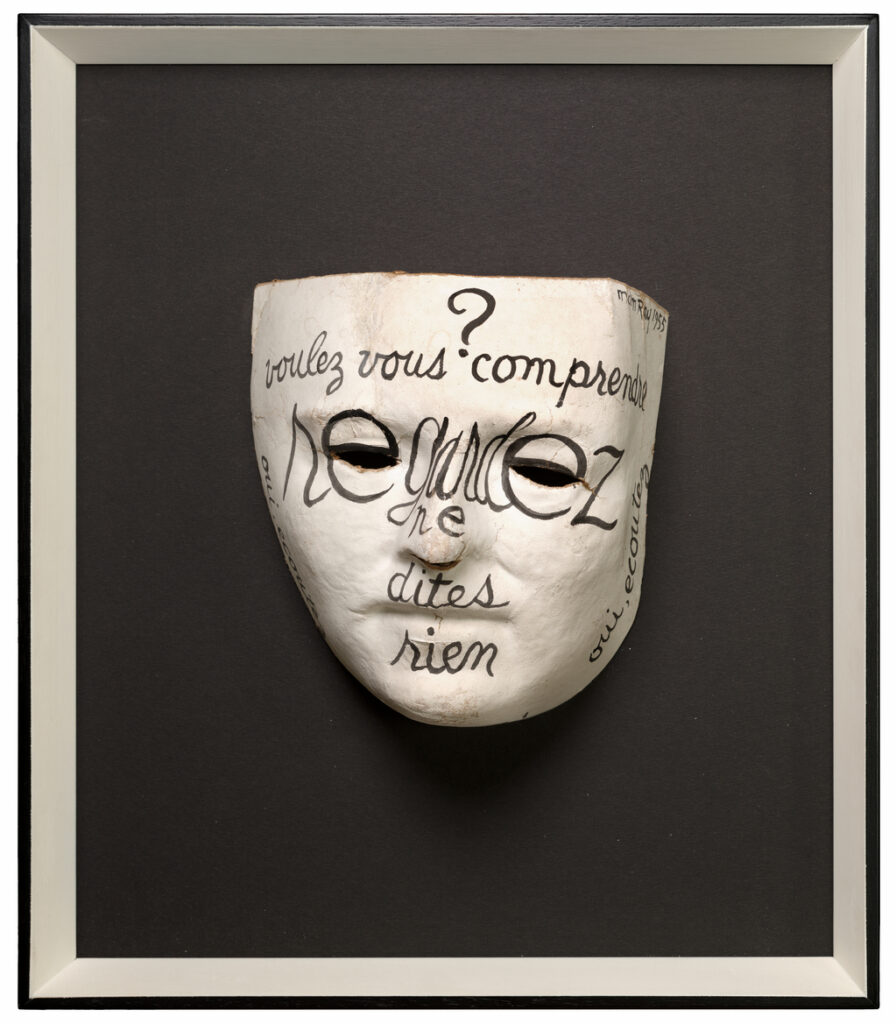
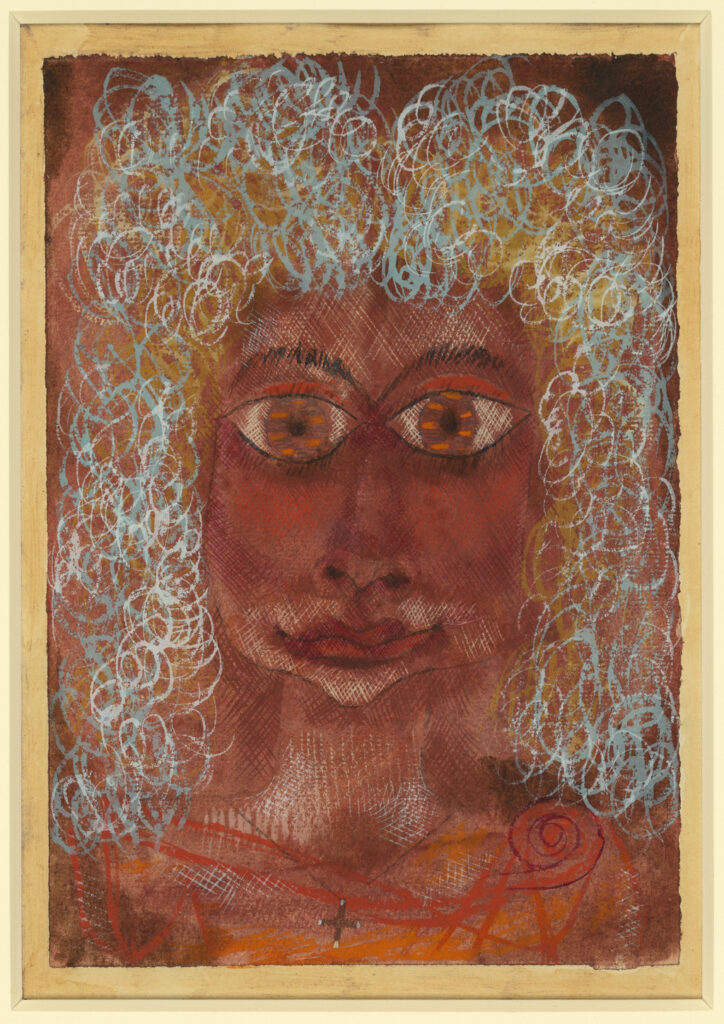
Klee engaged in avant-garde experimentation, and his work was widely visible through exhibitions and reproductive media. It circulated among artists associated with Dadaism and Surrealism, movements central to the works on view. Within this shared context, the mask became a powerful tool to imagine the fractures and symbolic qualities of identity.
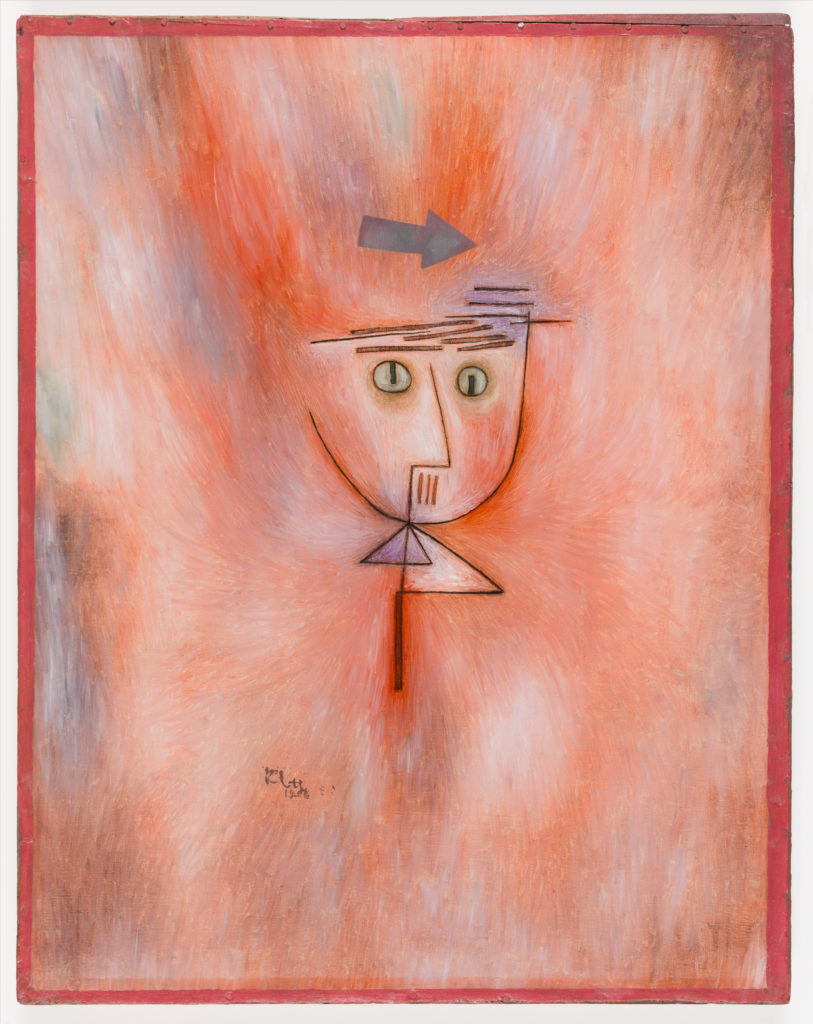
Header image: Paul Klee, Fast getroffen (Nearly Hit), 1928 (detail); collection SFMOMA; Albert M. Bender Collection, Albert M. Bender Bequest Fund purchase, 1944