Reimagined: The Fisher Collection at 10 Opening Countdown
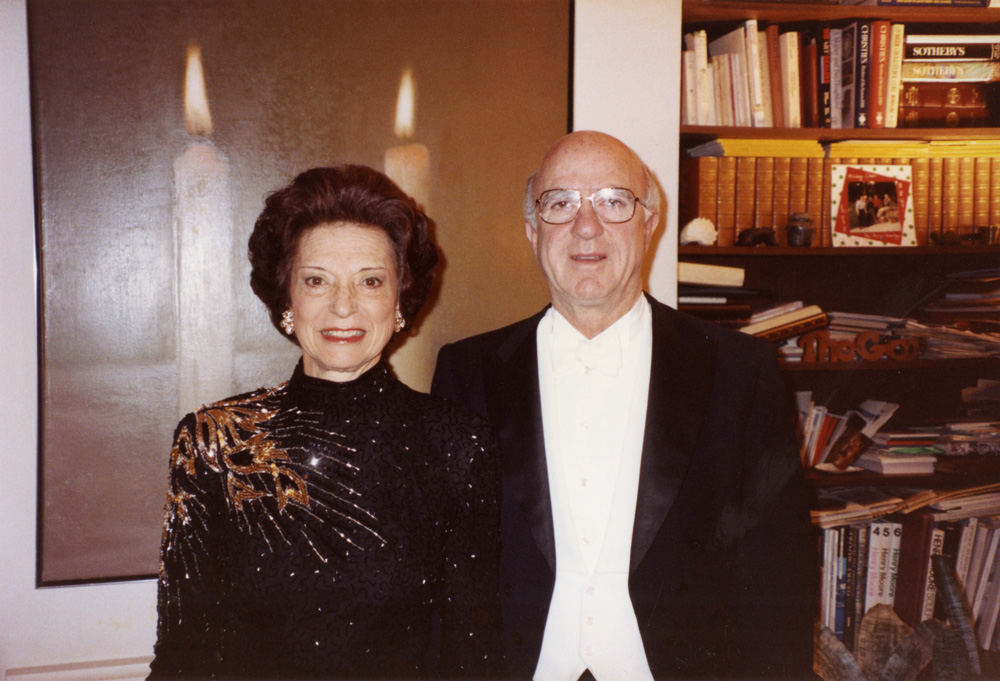
Doris and Don Fisher
Formed by the Gap Inc. founders beginning in the mid-1970s, the Doris and Donald Fisher Collection is one of the world’s leading private collections of contemporary art. For decades, the Fishers have played a central role at SFMOMA through board leadership, major gifts of art, and sustained support for exhibitions and education, a relationship that continues through an unprecedented partnership to present the collection at the museum. Learn more about them here.
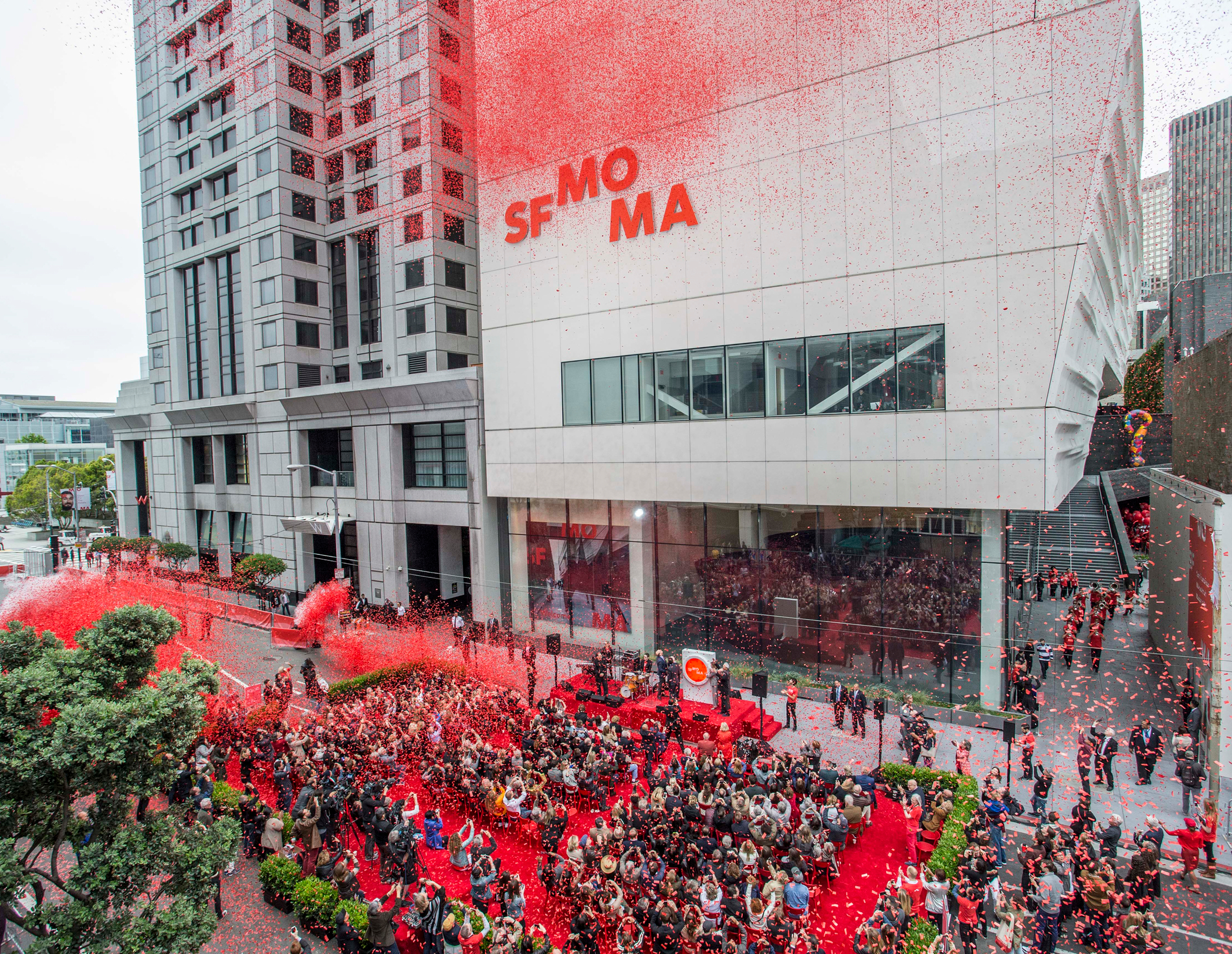
A Decade on View
Every 10 years, SFMOMA dedicates the Fisher galleries solely to Fisher Collection works, reflecting the singularity of the collection and reinvigorating the experience of those works for new and returning audiences. First introduced with SFMOMA’s 2016 expansion, the Fisher Collection at SFMOMA is now undergoing its most significant transformation to date, after a decade on view. In spring 2026, it will return as a fully reimagined installation, offering a more accessible and engaging experience. Count down here with us as we prepare for its reopening!
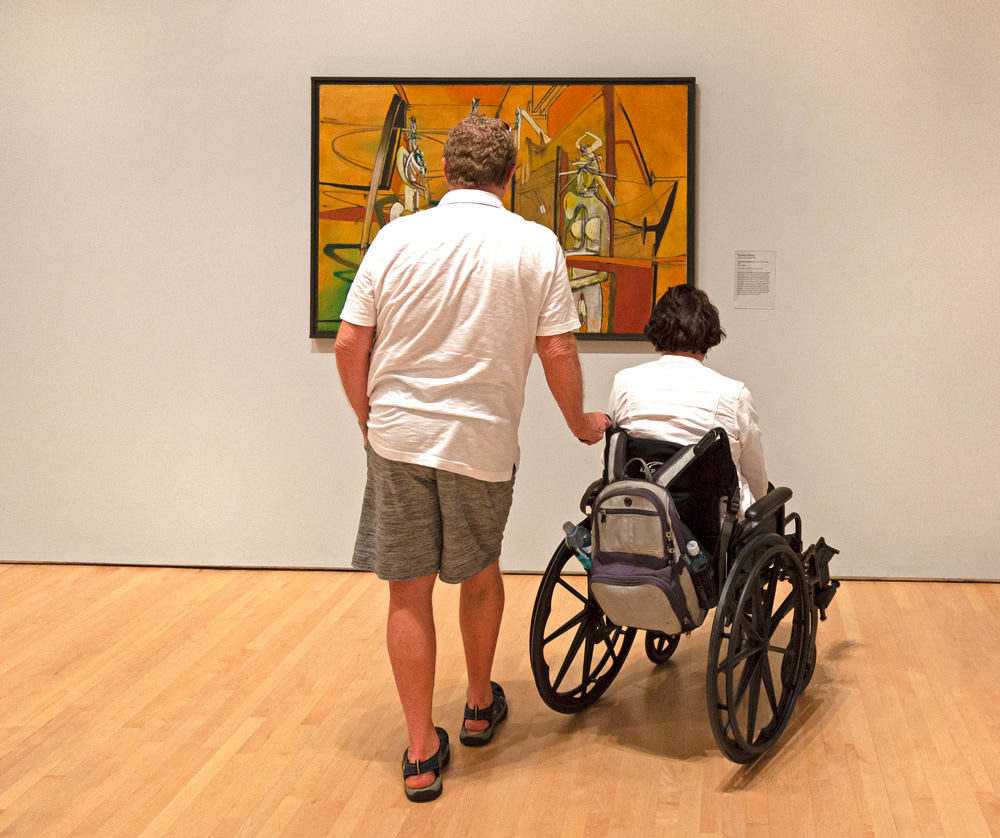
Accessibility Offerings
Integrated accessibility features such as visual descriptions, captioned media, tactile experiences, and supportive seating are woven throughout each floor. Together, these efforts make the reinstallation a model for new approaches, informing future practices across the museum.
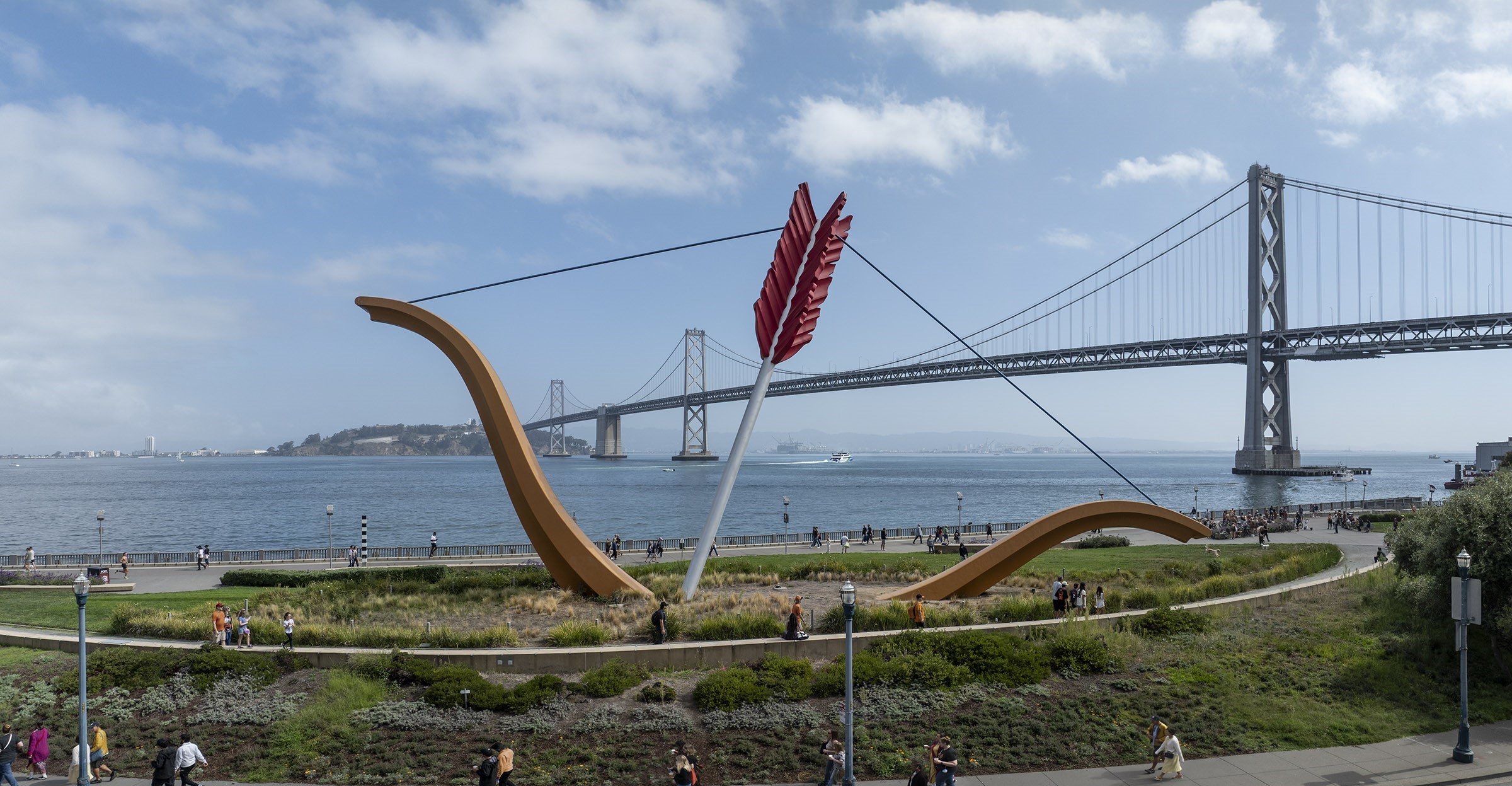
Floor 3 – Claes Oldenburg + Coosje van Bruggen: Thinking Big
This gallery is dedicated to sculptures and models for the artists’ large-scale projects. For over three decades, the husband‑and‑wife team transformed everyday objects into monumental sculptures and urban landmarks around the world. The works are presented alongside large‑scale photographs and diagrams of their public monuments.
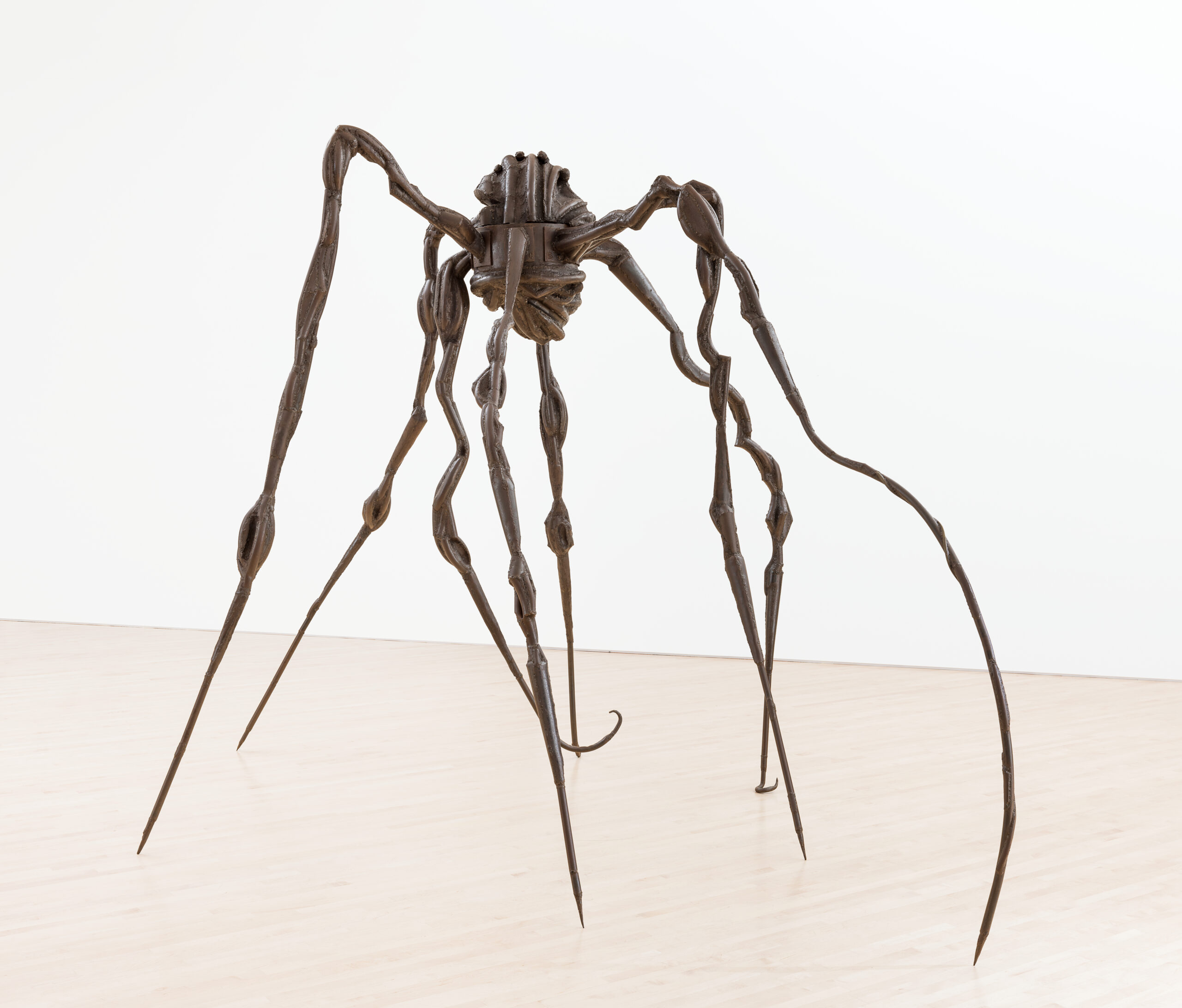
Louise Bourgeois, Spider
Back on view since 2019, Spider (1995) is a signature work by French artist Louise Bourgeois, whose career spanned more than seven decades and who began exploring the spider motif in the 1940s. Over eight feet tall, the sculpture transforms a familiar creature into something monumental and unsettling, prompting viewers to consider whether it represents a monster, a protector, or both.
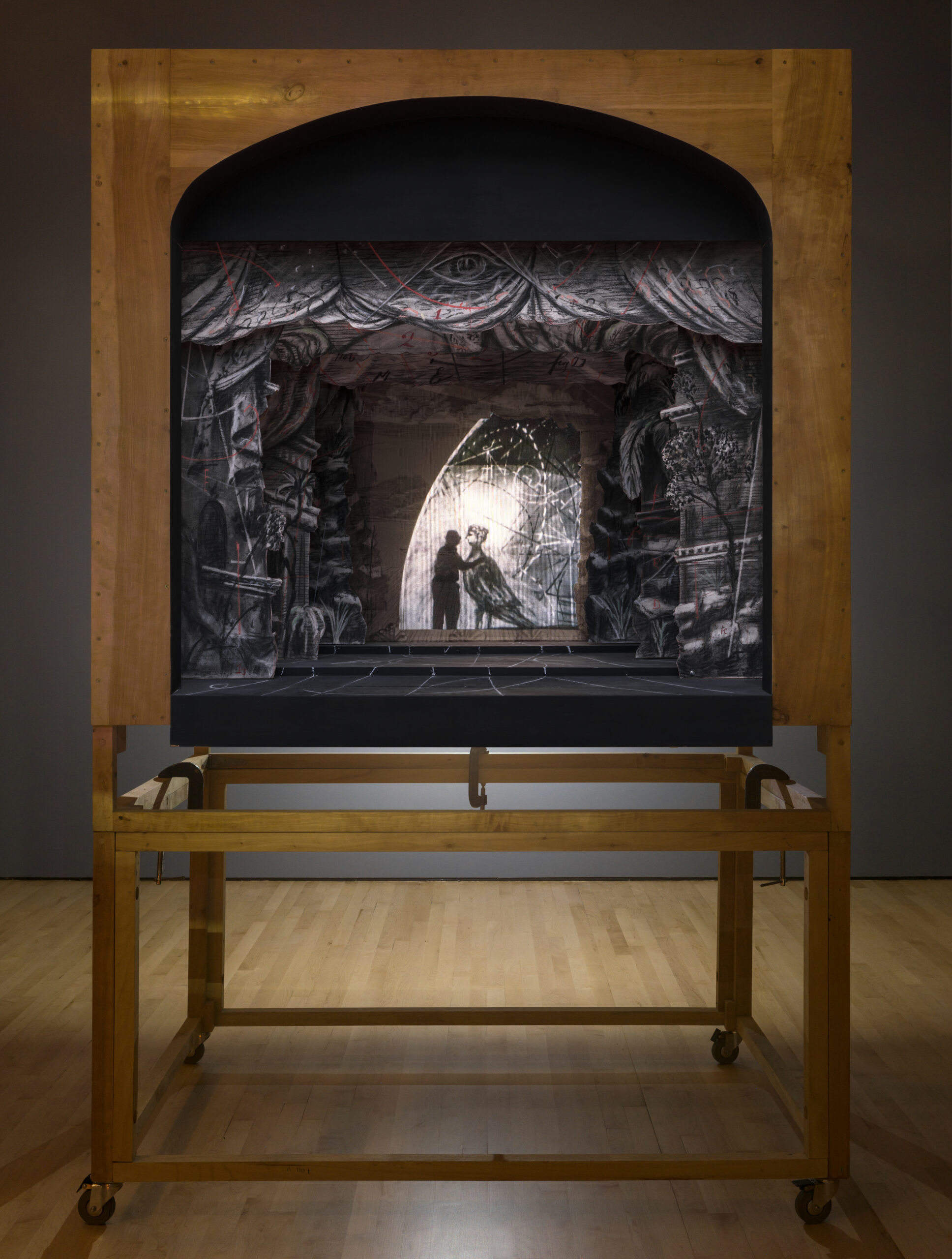
William Kentridge, Preparing the Flute
South African artist William Kentridge moves fluidly across media, creating installations, films, drawings, and operas. The model theater in Preparing the Flute (2005) became a testing ground for his staging of Mozart’s The Magic Flute, an opera that depicts a conflict between superstition and reason. Kentridge draws image on top of image, layering shapes and ideas as they occur to him, layers that fade and transform, until, as he says, “all that you see at each moment is the present.”
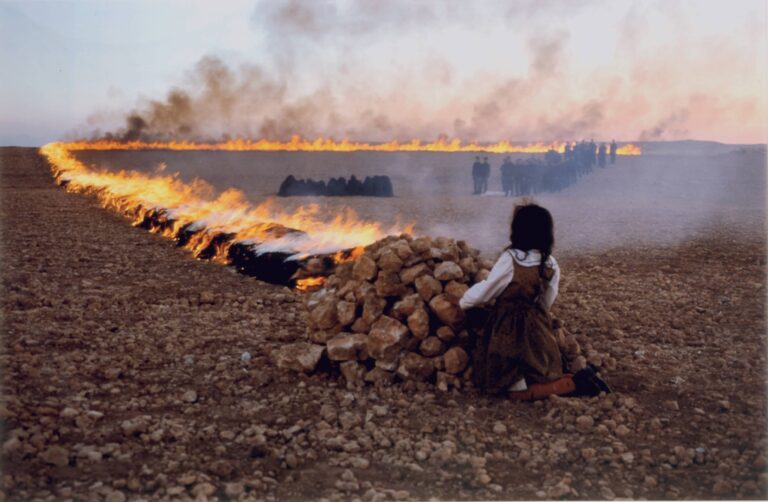
Shirin Neshat, Passage
Passage (2001) presents a Muslim funeral rite unfolding across three parallel scenes that converge only at the film’s end. Inspired by televised images of the Palestinian‑Israeli conflict, the work unfolds as a quiet meditation on loss, grief, and hope.
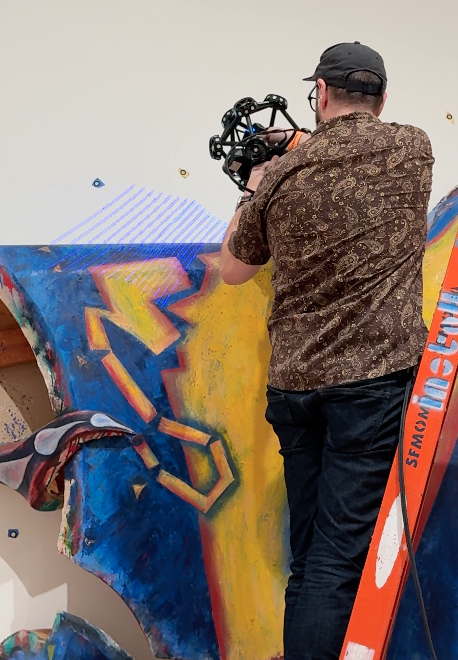
Tactile Objects
Throughout the reimagined installation of the Fisher Collection, tactile elements invite visitors to engage through touch, offering multiple ways to connect with and understand the artworks, including tactile markers for accessibility.
Floor 4 – Ways of Seeing: Fourteen Artists
This floor invites visitors into galleries devoted to 14 artists — Dan Flavin, Philip Guston, Roy Lichtenstein, Agnes Martin, Joan Mitchell, Elizabeth Murray, Sigmar Polke, Gerhard Richter, Richard Serra, and Cy Twombly, among others. Through audio, video, and written materials featuring the artists’ own words, visitors can get to know them as both innovative creators and complex individuals, and connect with the works on a personal level. A multimedia timeline also shares the story of the Fisher Collection and Doris and Donald Fisher’s enduring commitment to make art accessible to the public.
Louise Nevelson, Rain Garden Zag IV
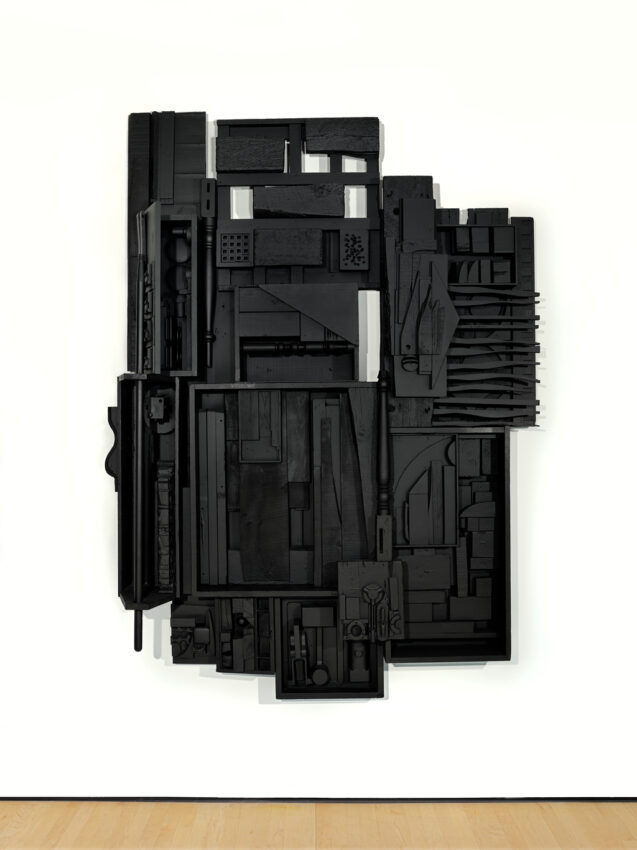
Built from wood scraps gathered on New York City streets and coated entirely in black, Rain Garden Zag IV (1978) rises more than seven feet tall, and embodies Louise Nevelson’s vision of sculpture as a unified field of form and shadow. A yearslong conservation effort restored the work according to the artist’s belief that it should be experienced as a whole. Read more about that conservation effort here.

Isamu Noguchi, Cronos
Inspired by his long collaboration with dancer Martha Graham and reflecting his deep engagement with dance, Isamu Noguchi’s Cronos (1947, cast 1986) draws on the Greek myth of a god who devours his children, evoking cycles of death and rebirth. Created in the aftermath of World War II, the sculpture reflects themes Noguchi would later revisit in his memorial design for Hiroshima.
Sol LeWitt, Wall Drawing #273
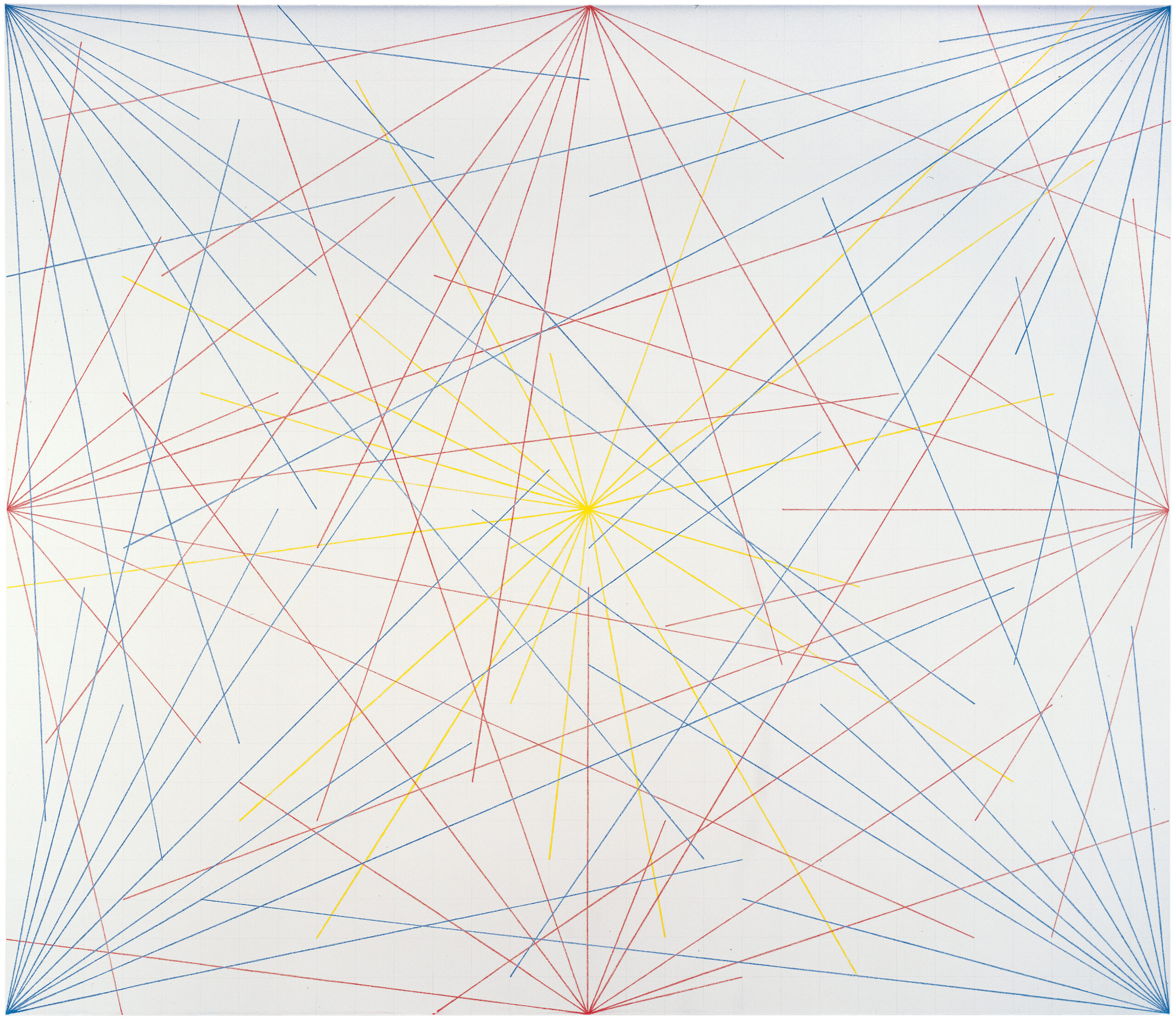
In 1968, Sol LeWitt became convinced that the only way to create a fully two‑dimensional work of art was to draw directly on the wall, an approach that led him to devise more than twelve hundred wall drawings over his career. Wall Drawing #273 (1975) is created from a set of precise instructions that determine how lines relate to the architecture of the space in which it is drawn. Each time the work is realized, it changes in response to the room’s dimensions and the choices made by its drafters, making the drawing both rigorously structured and endlessly variable.

Floor 5 – Calder, Kelly, LeWitt: Fundamentals of Form
Floor 5 highlights the groundbreaking work of Alexander Calder, Ellsworth Kelly (shown above, Spectrum I, 1953), and Sol LeWitt, three artists collected in exceptional depth by Doris and Donald Fisher. Though emerging from different historical moments, they are united by their exploration of line, color, shape, architecture, and systems of chance and repetition.
The Co-Lab
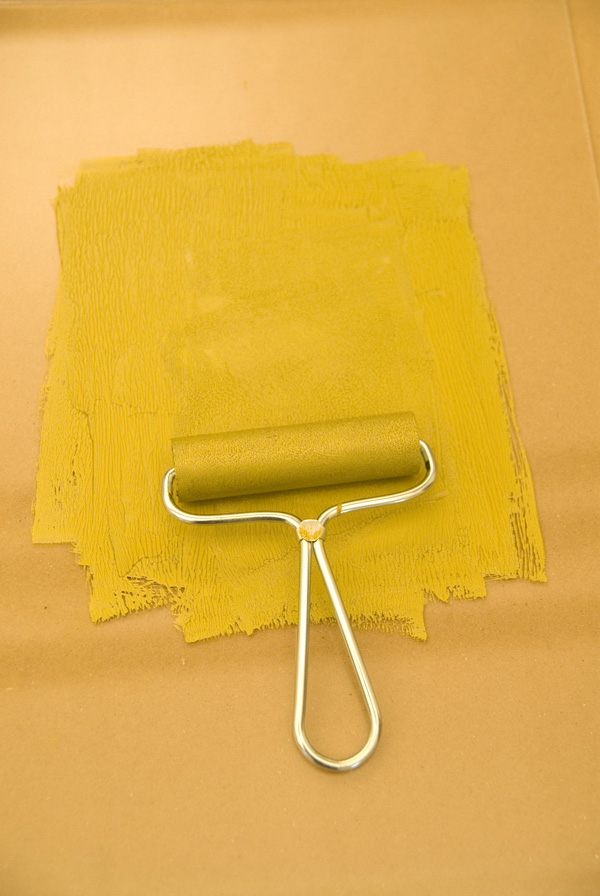
A newly created studio space offers hands-on activities for adults, families, and children, with family-friendly labels and vibrant design elements that invites visitors of all ages to gather, learn, relax, and explore together.
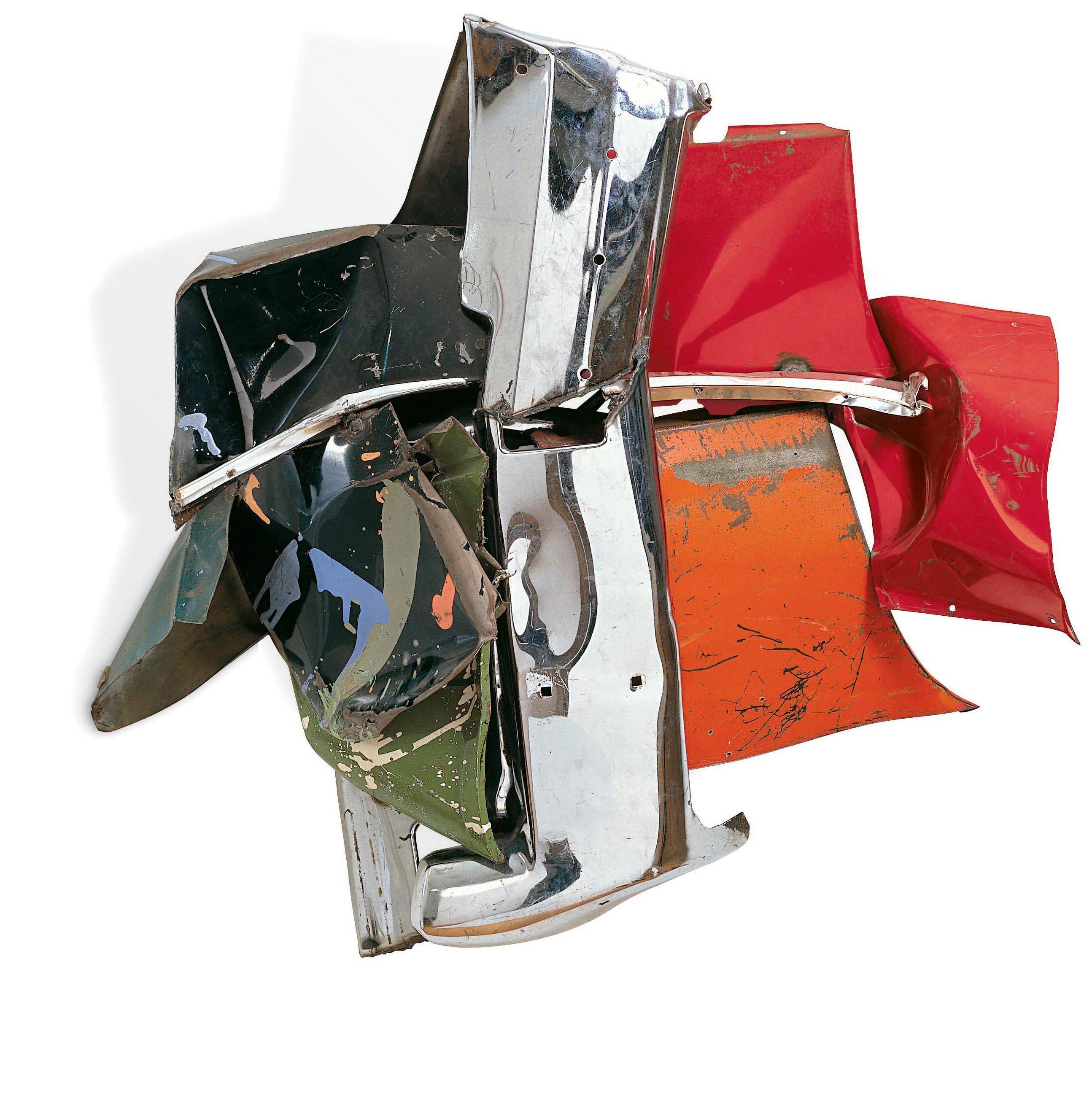
John Chamberlain, Fiddler’s Foot
Returning to found car parts in the mid‑1970s, John Chamberlain created large-scale wall-mounted sculptures like Fiddler’s Foot (1978), transforming metal into expressive forms inspired by abstract painting.

Philip Guston, As It Goes
Created just two years before Philip Guston’s death, the painting As It Goes (1978) brings together recurring motifs from his late work (brushes, glasses, clenched fists, and shoe soles) to form a haunting, symbolic self-portrait shaped by creativity and mortality.

Duane Hanson, Man with Ladder
At first glance, this figure appears to be a museum worker pausing mid-task. In fact, Man with Ladder (1994) is a lifelike sculpture by Duane Hanson, who used real clothing and tools to portray working people he regarded as the often-overlooked heroes of society.
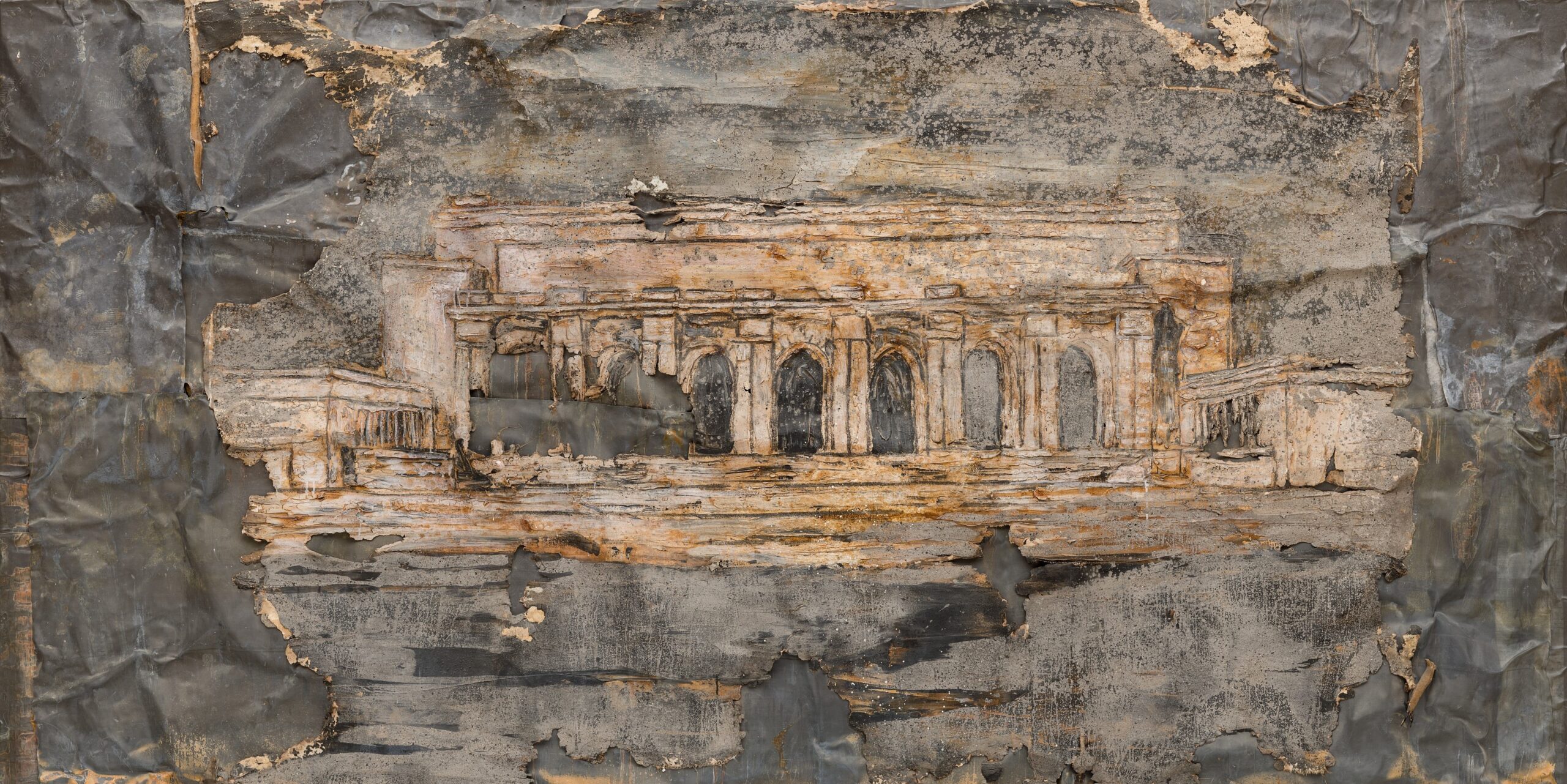
Floor 6 – Memory and Matter: Personal and Collective Histories
This floor brings together artists whose work engages with memory and history, centering on Anselm Kiefer (shown above, Das Museum, 1984-1992) and William Kentridge, who examine the legacies of nationalism and colonialism through material, process, and narrative. Additional galleries feature artists who use personal and collective memory to explore how the past continues to echo in the present. The Kentridge galleries are designed by the artist’s longtime collaborator, Sabine Theunissen, creating a contemplative space for audiences to engage deeply with the works.
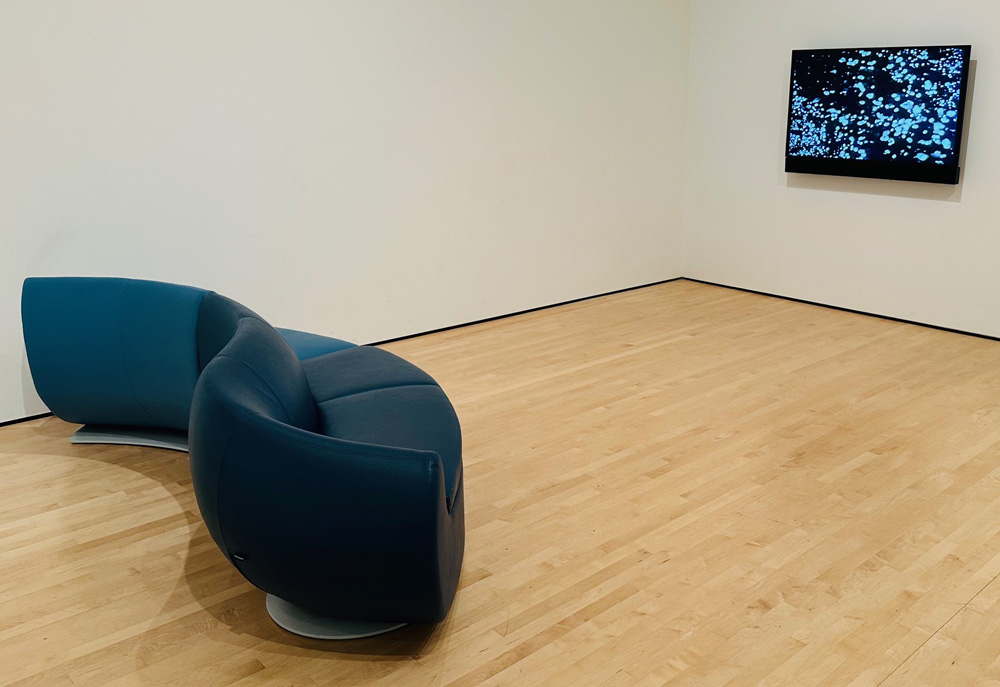
Room to Linger
To encourage further reflection, comfier furniture and more seating let you slow down and take in the details. For example, floor 5 (as seen above) has a new spot to lounge, and floor 6 features large seating areas and contemplative spaces where visitors can pause and listen to personal audio responses from Bay Area poets and creatives, illuminating the ongoing relevance of the works on view.
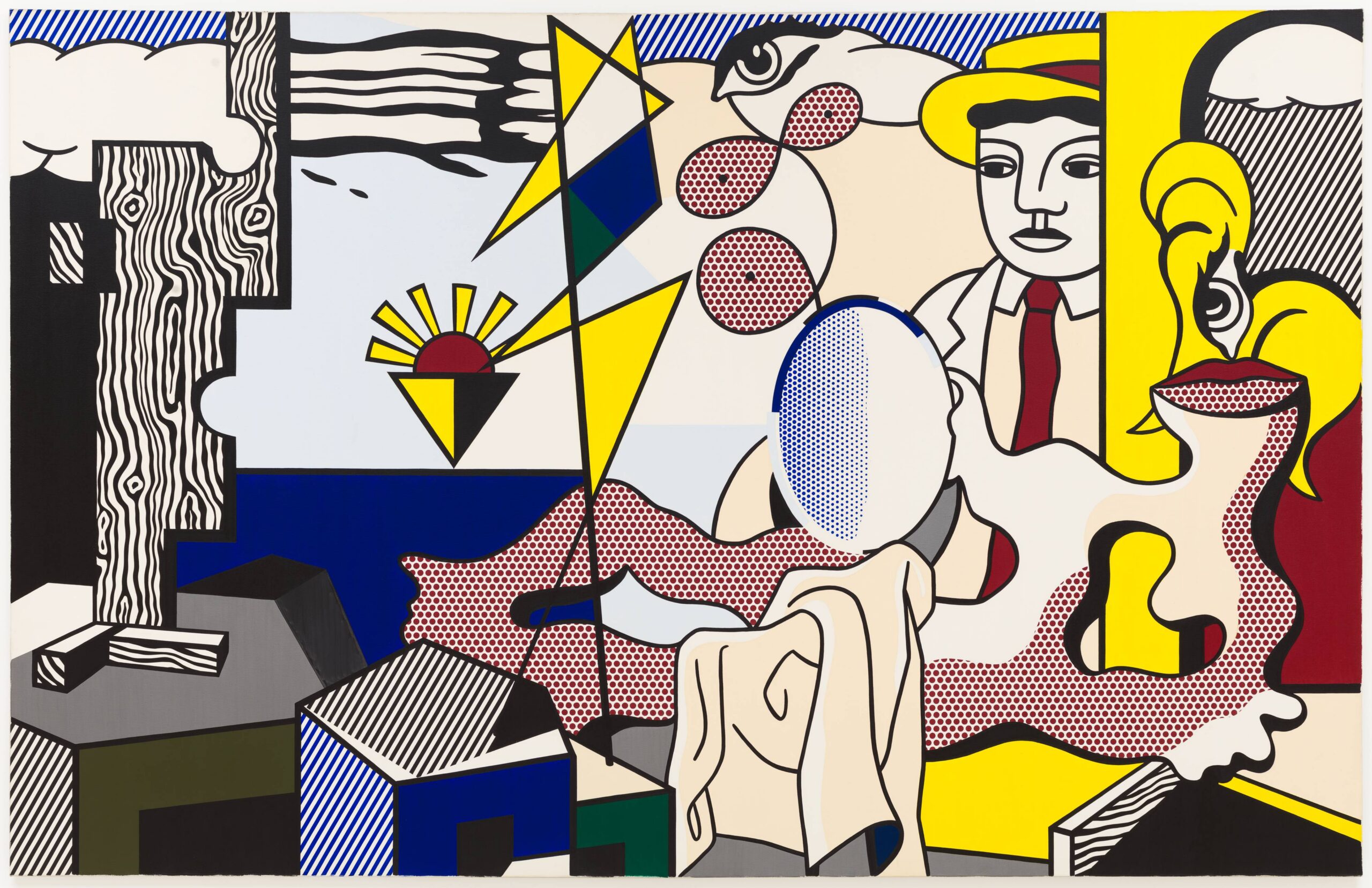
Roy Lichtenstein, Figures with Sunset
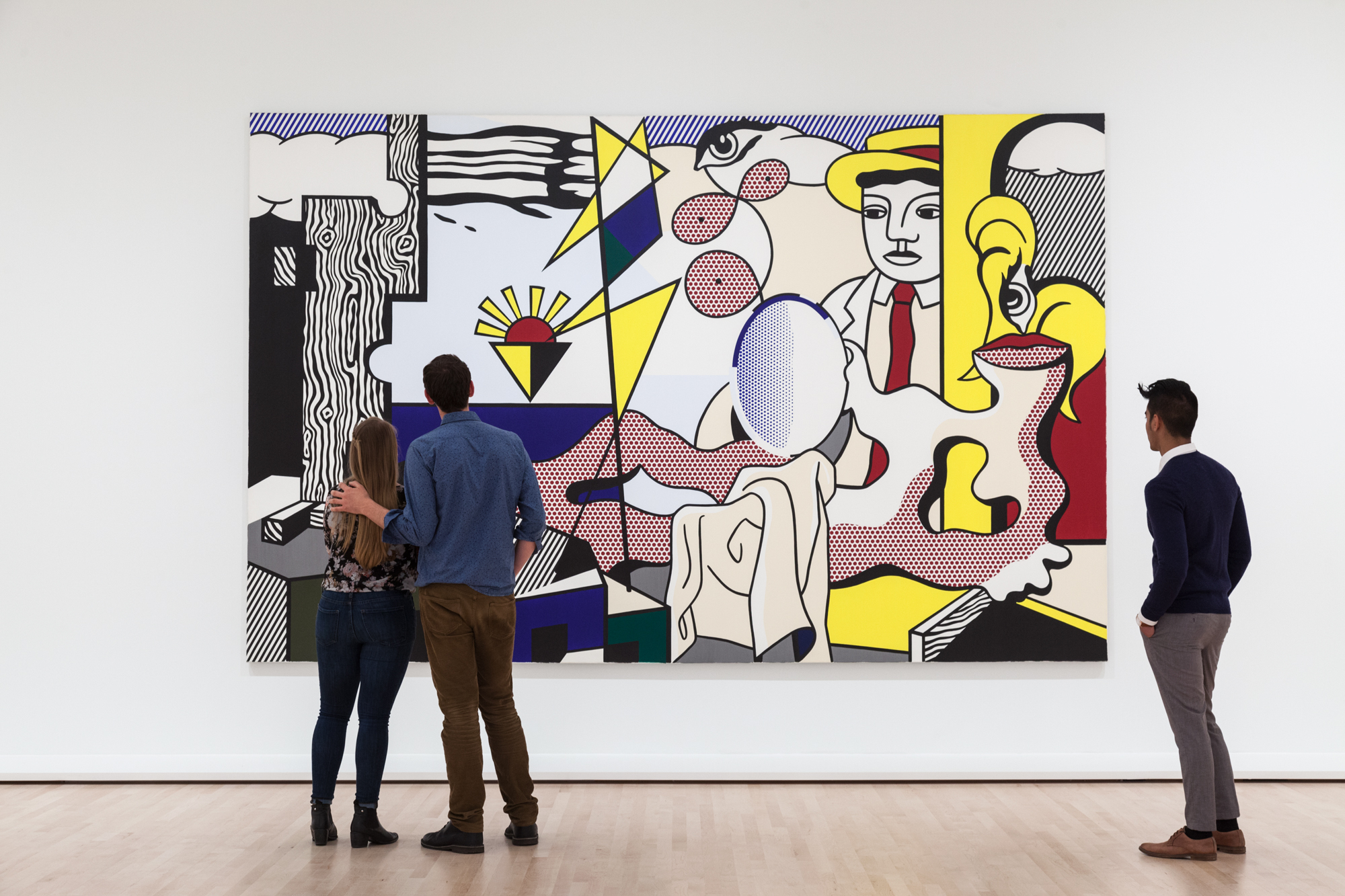
Rendered in Roy Lichtenstein’s unmistakable comic‑based style, Figures with Sunset (1978) uses a radiant sunset to frame fragmented, Surrealist‑inspired forms. Together with Nerts (1978) — the first major work acquired by Doris and Donald Fisher in 1979 — the painting highlights the origins of the collection and Lichtenstein’s dialogue between fine art and popular imagery.
Joan Mitchell, Bracket
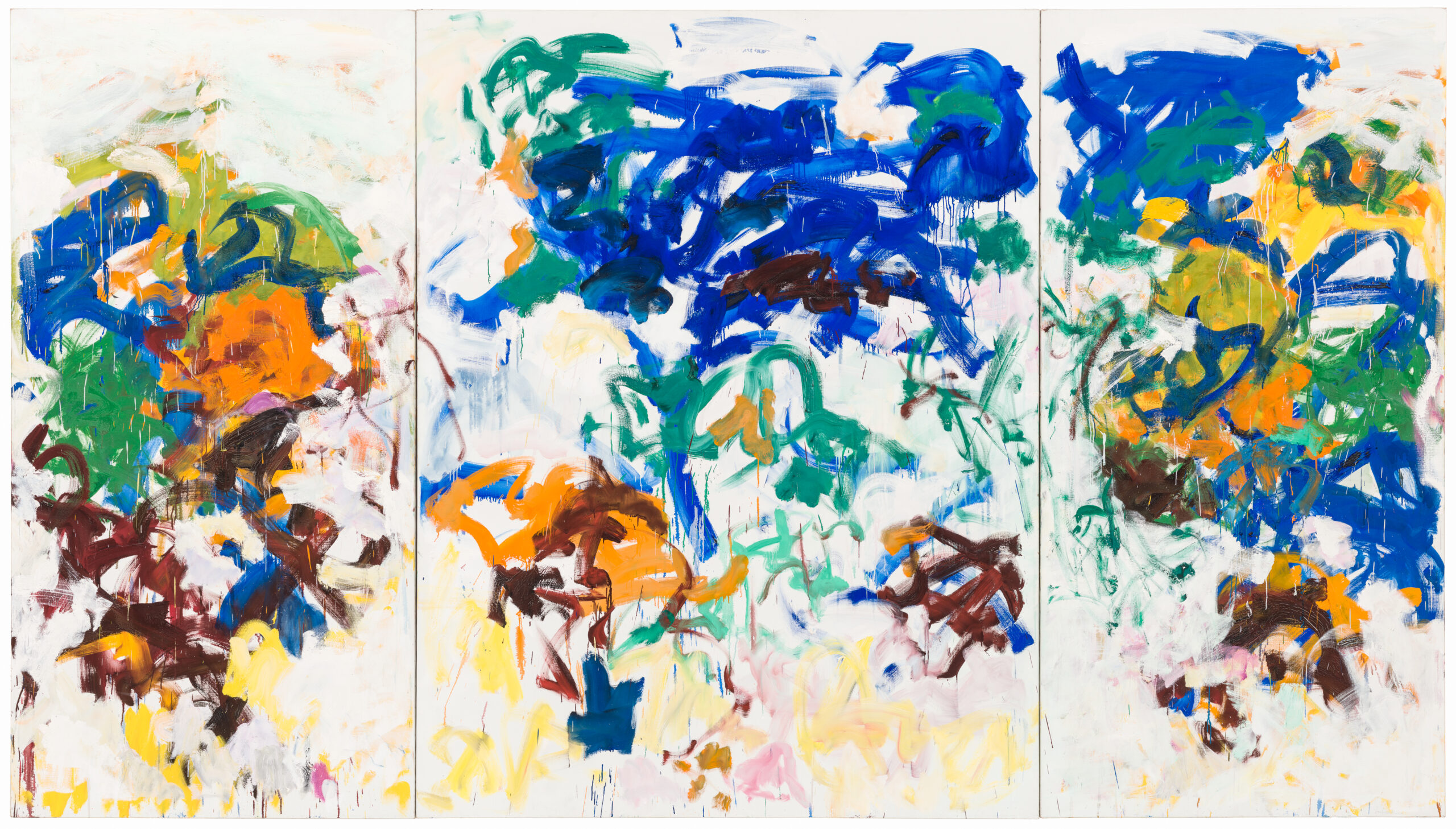
In Bracket (1989), Joan Mitchell joins multiple canvases to create an expansive, immersive composition inspired by her experience of the landscape. Painted just three years before her death, the work pulses with bold color and energetic brushwork, capturing not nature itself but what it left with her through memory.
Elizabeth Murray, My Manhattan, January
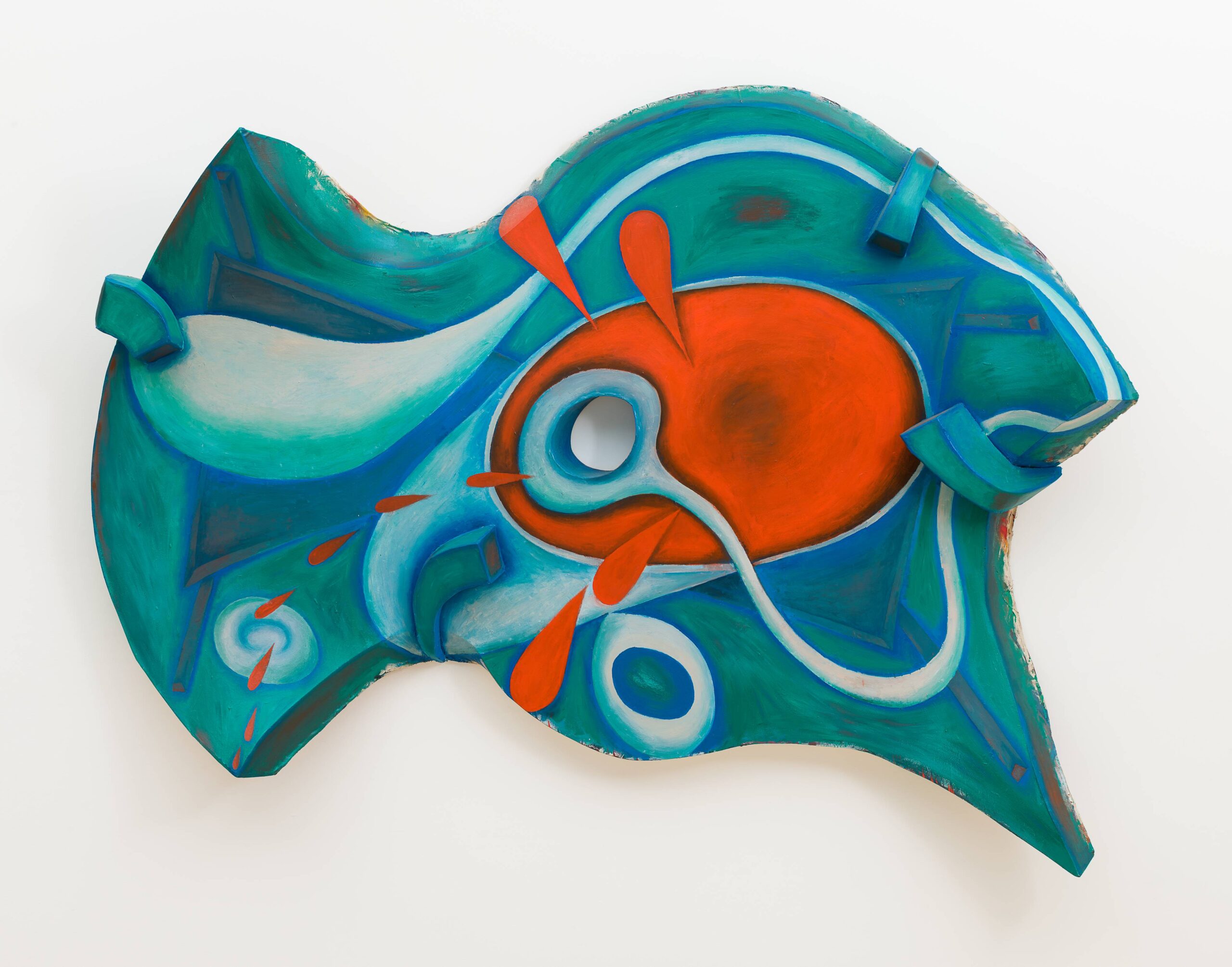
In the warped canvas of My Manhattan, January (1987), Elizabeth Murray transforms everyday studio objects into a distorted, table‑like form, where bodily references and splashes of paint blur the line between familiar imagery and the act of painting itself.
Accessible Storytelling
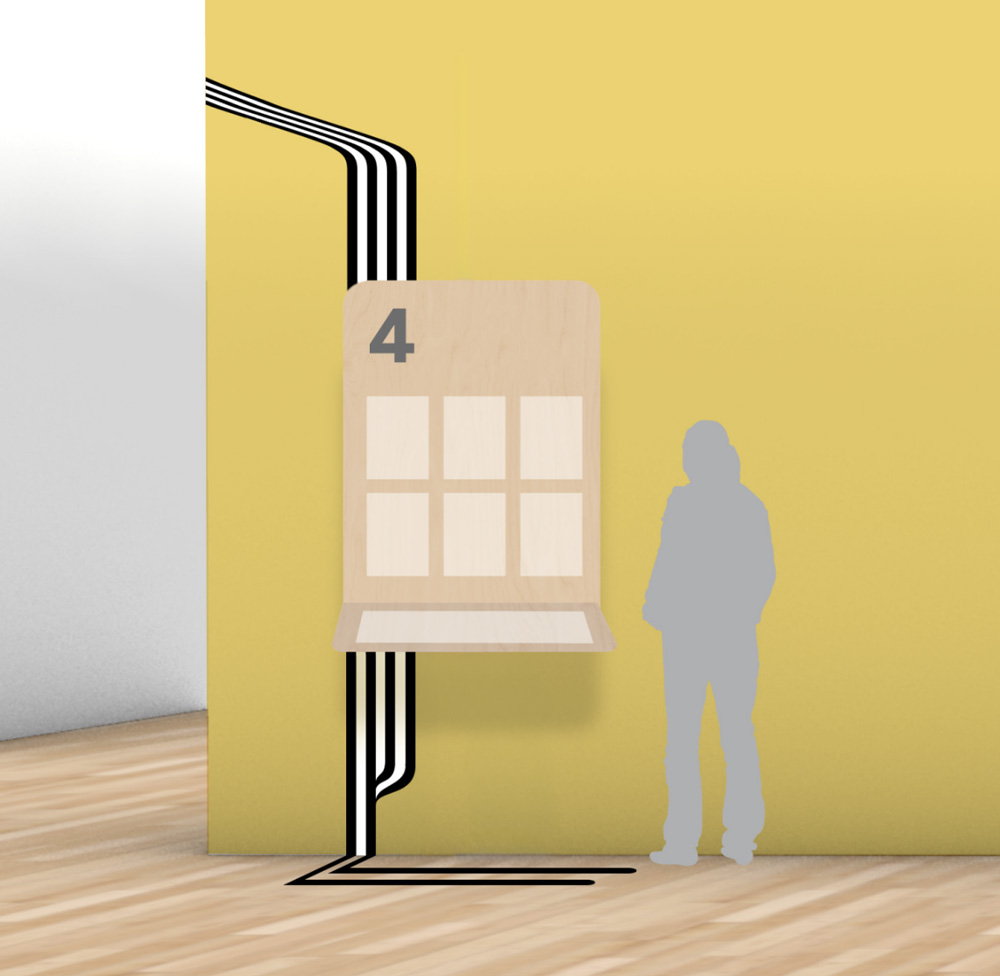
Gallery signage throughout the installation expands traditional wall texts with tactile maps, directional signage, and interpretive materials that welcome visitors of all abilities. On Floor 4, multimedia interpretive panels introduce each artist and personalize their work through multiple modes of engagement.
Sigmar Polke, Springbrunnen (Fountain)
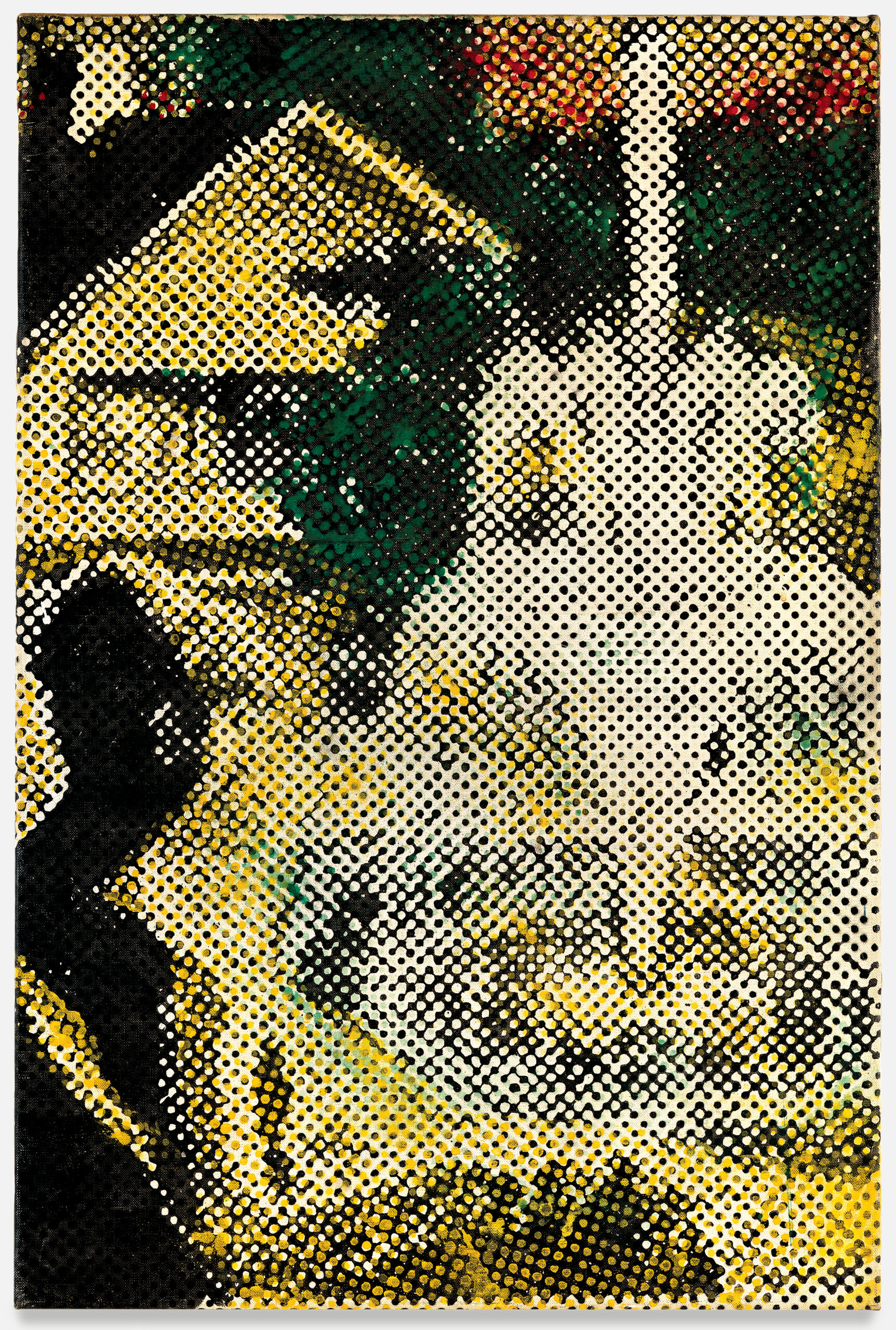
In Springbrunnen (1966), Sigmar Polke depicts a garden scene using his signature Rasterbilder (halftone) technique, drawn from printed images. Unlike the uniform dots of commercial printing, or Roy Lichtenstein’s Benday dots, Polke varies the size, density, and color of his dots, deliberately distorting the image.
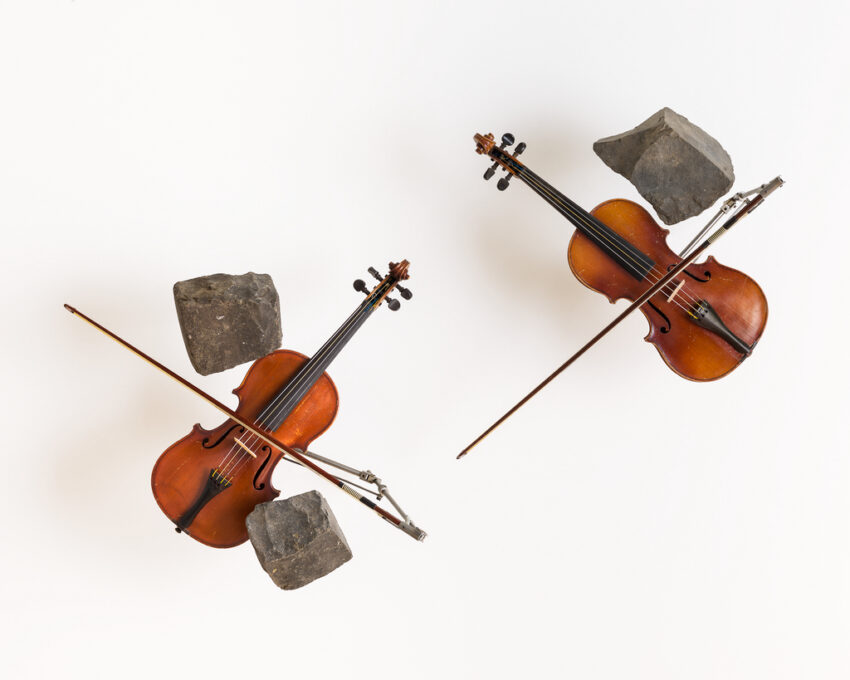
Rebecca Horn, Seufzer der Stein (The Sighs of Stones)
Rebecca Horn’s Seufzer der Stein (The Sighs of Stones) (1996) releases haunting violin cries at regular intervals through mechanical bows. The work reflects Horn’s long‑standing exploration of sound, memory, and history, suggesting music as a voice for experiences marked by trauma and silence.
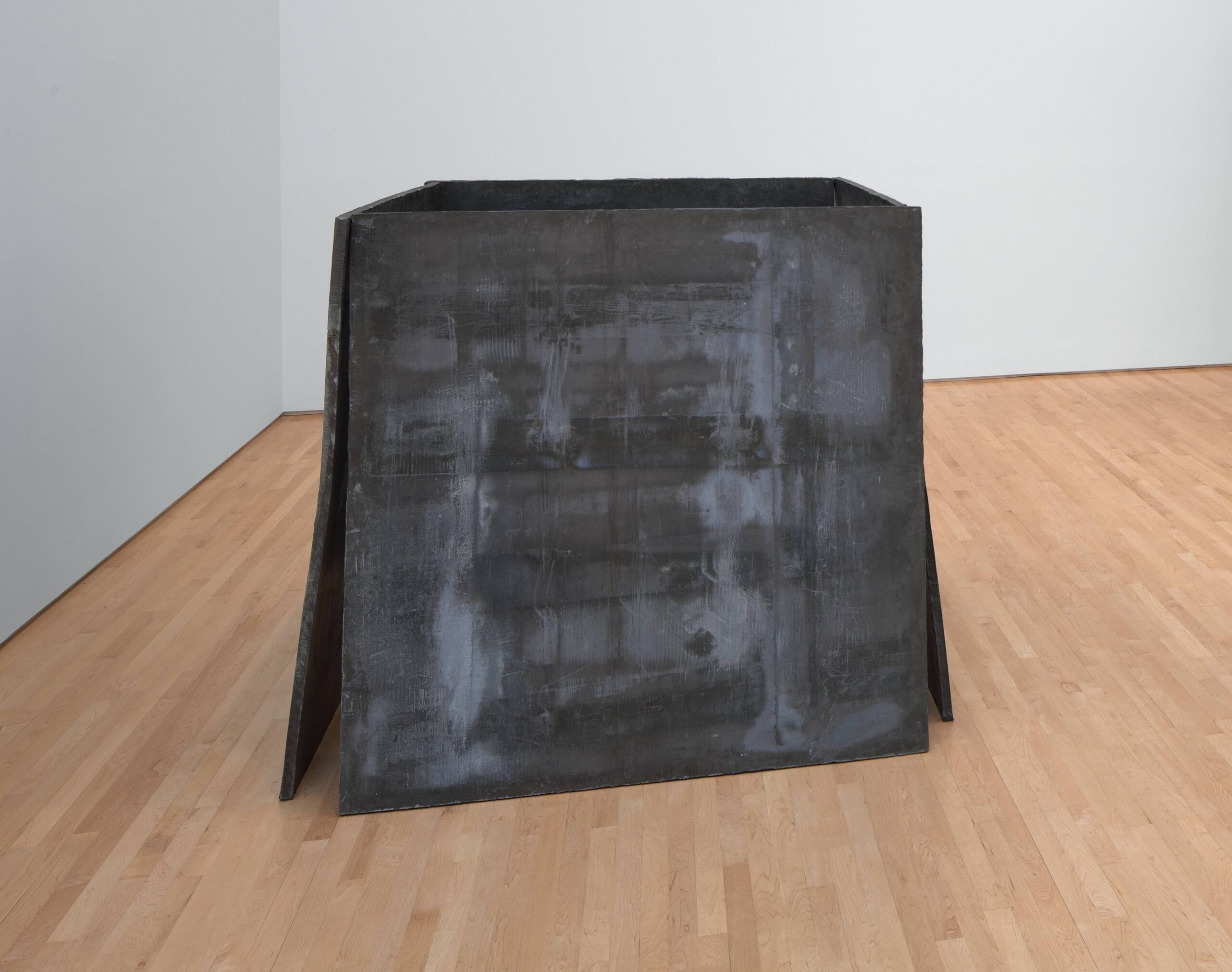
Richard Serra, House of Cards
In House of Cards (1969/1978), four heavy lead plates lean against one another, held upright solely by their own weight. Though they appear precarious, the work achieves a tense equilibrium, embodying Richard Serra’s investigation of gravity, balance, and the physical relationship between bodies in space.
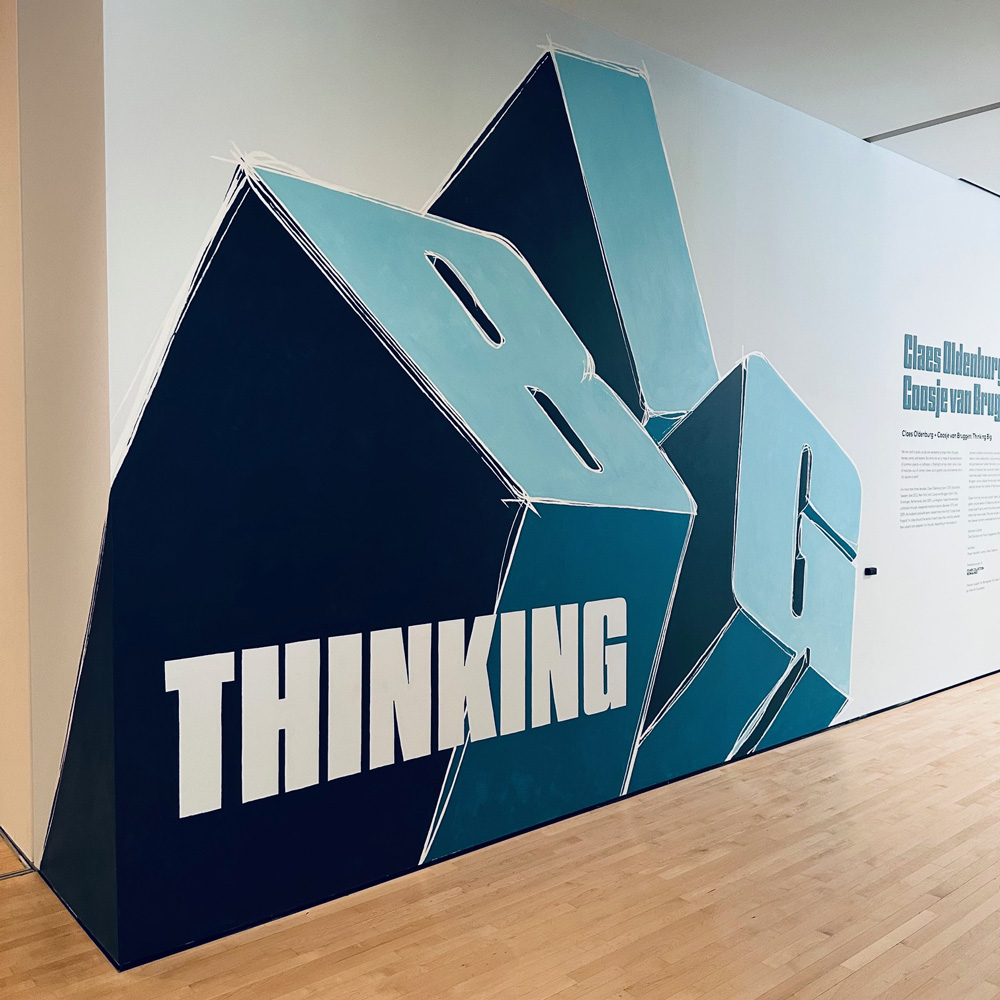
Fresh, New Design
Inspired by the Fisher Collection, the exhibition design uses bold color palettes, thoughtfully integrated furniture, and dynamic graphics that engage directly with SFMOMA’s architecture to create welcoming, immersive spaces beyond the white cube.
Stories Through Audio
Audio guides throughout the galleries offer rich storytelling across the Fisher Collection, featuring artist interviews and commentary. With stops in multiple languages and a narrative thread spanning all floors, the guides trace both individual works and the development of the collection itself. Tune in here.
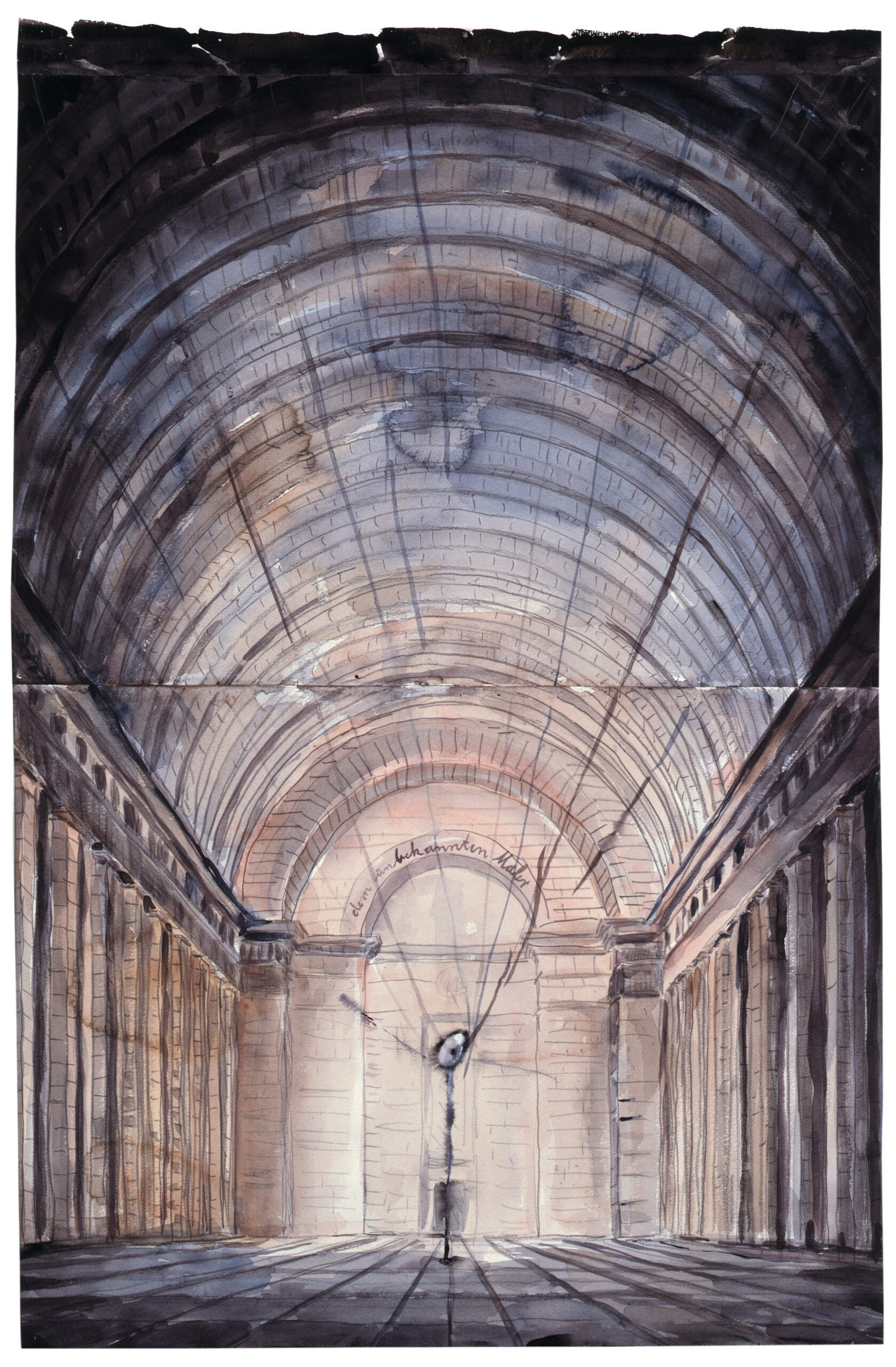
Anselm Kiefer, Dem unbekannten Maler (To the Unknown Painter)
In Dem unbekannten Maler (To the Unknown Painter) (1982), Anselm Kiefer evokes an unrealized Nazi memorial, replacing its intended victory statue with a solitary artist’s palette. Both vulnerable and radiant, the palette suggests art as a victim of oppression and at the same time its enduring potential as a source of renewal.
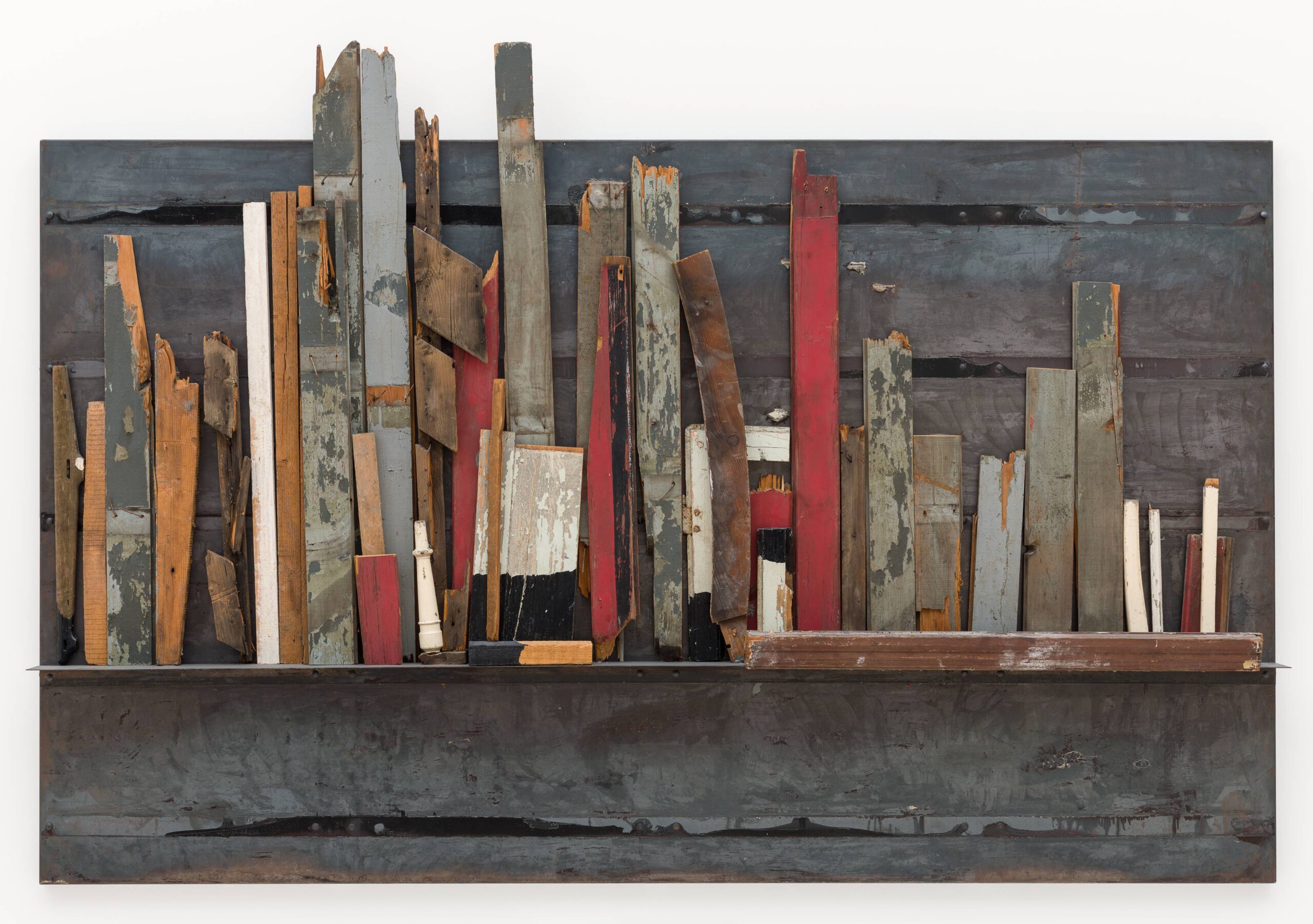
Jannis Kounellis, Untitled
In Untitled (1983), Jannis Kounellis draws on the ideas of Arte Povera, using humble, everyday materials to reflect the lived reality of the modern city. Rather than invoking classical grandeur, the work finds poetry in the ordinary and the discarded.
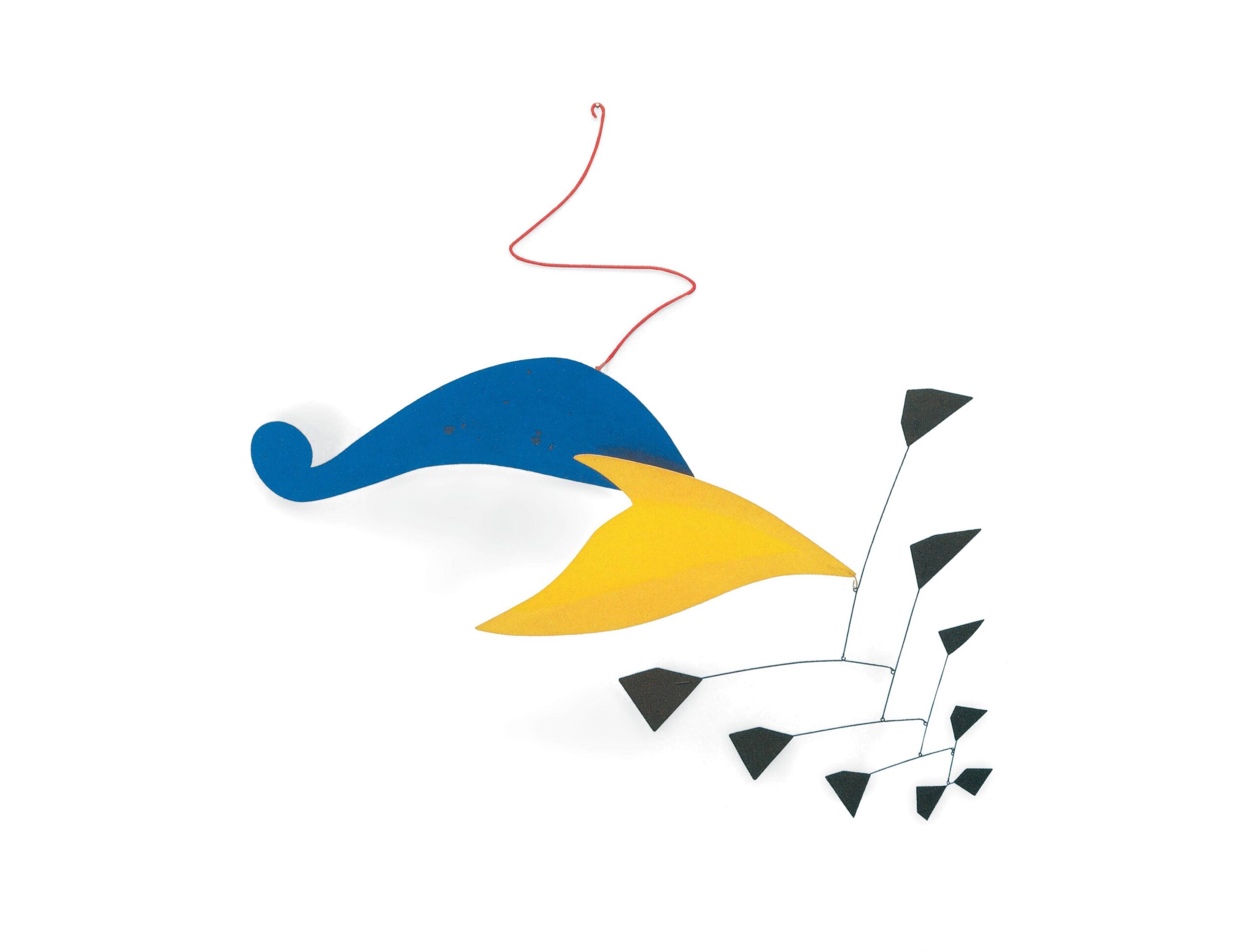
Alexander Calder, Fishy
In Fishy (1962), Alexander Calder uses bright primary colors and subtly moving elements to suggest the form and fluid motion of a fish without depicting it directly. Anchored to the wall yet animated by gentle movement, the work reflects Calder’s shift toward abstraction and his enduring fascination with the sea.
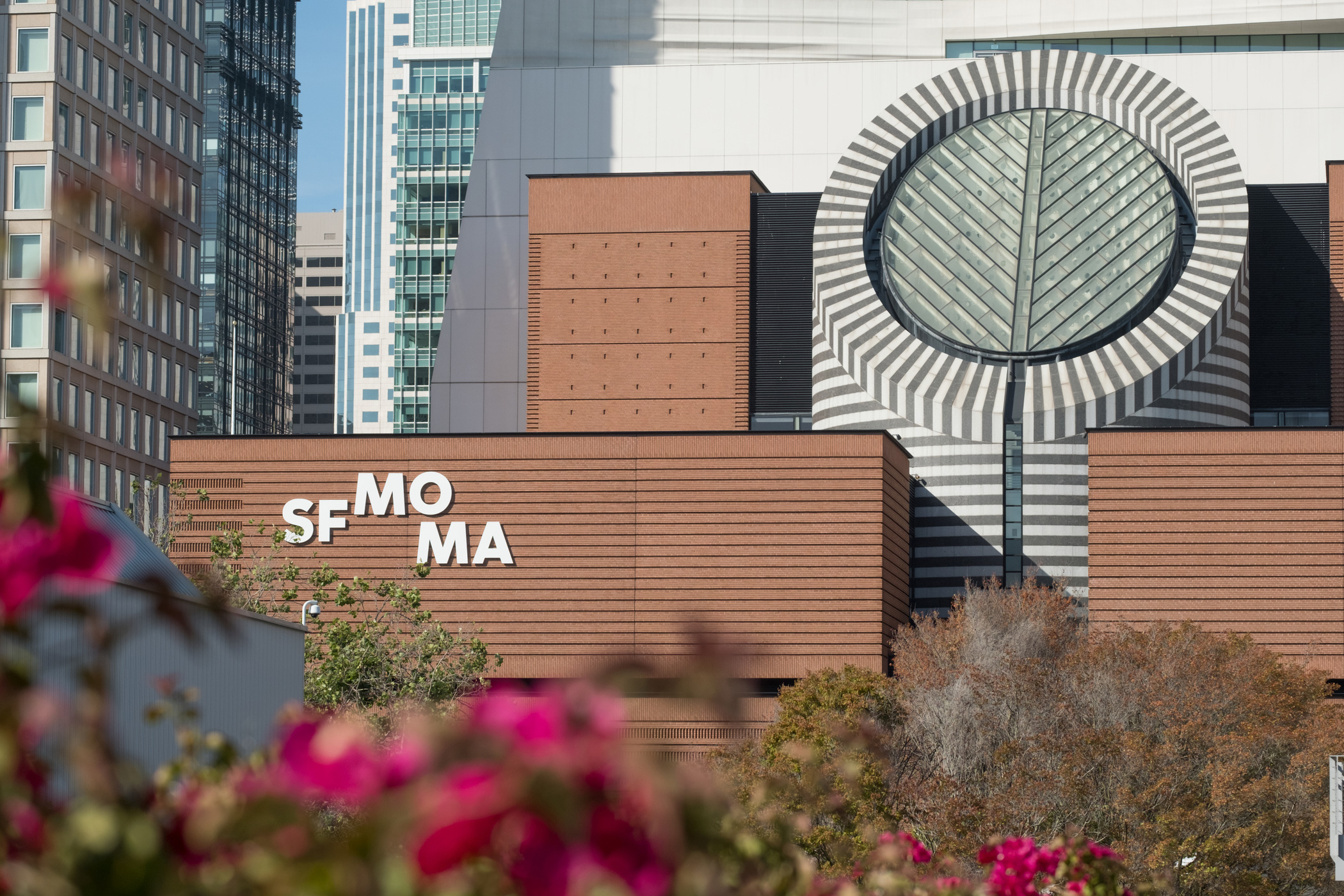
A New Chapter Unveiled
Today, on April 18, 2026, SFMOMA reveals a fully reimagined presentation of the Doris and Donald Fisher Collection! Spanning four floors and featuring nearly 250 works by 35 artists, the new installation transforms how modern and contemporary art is experienced through inclusive design, accessible storytelling, and deeply personal connections to artists, artworks, and the collection’s history.